

 Image 1 of 1
Details
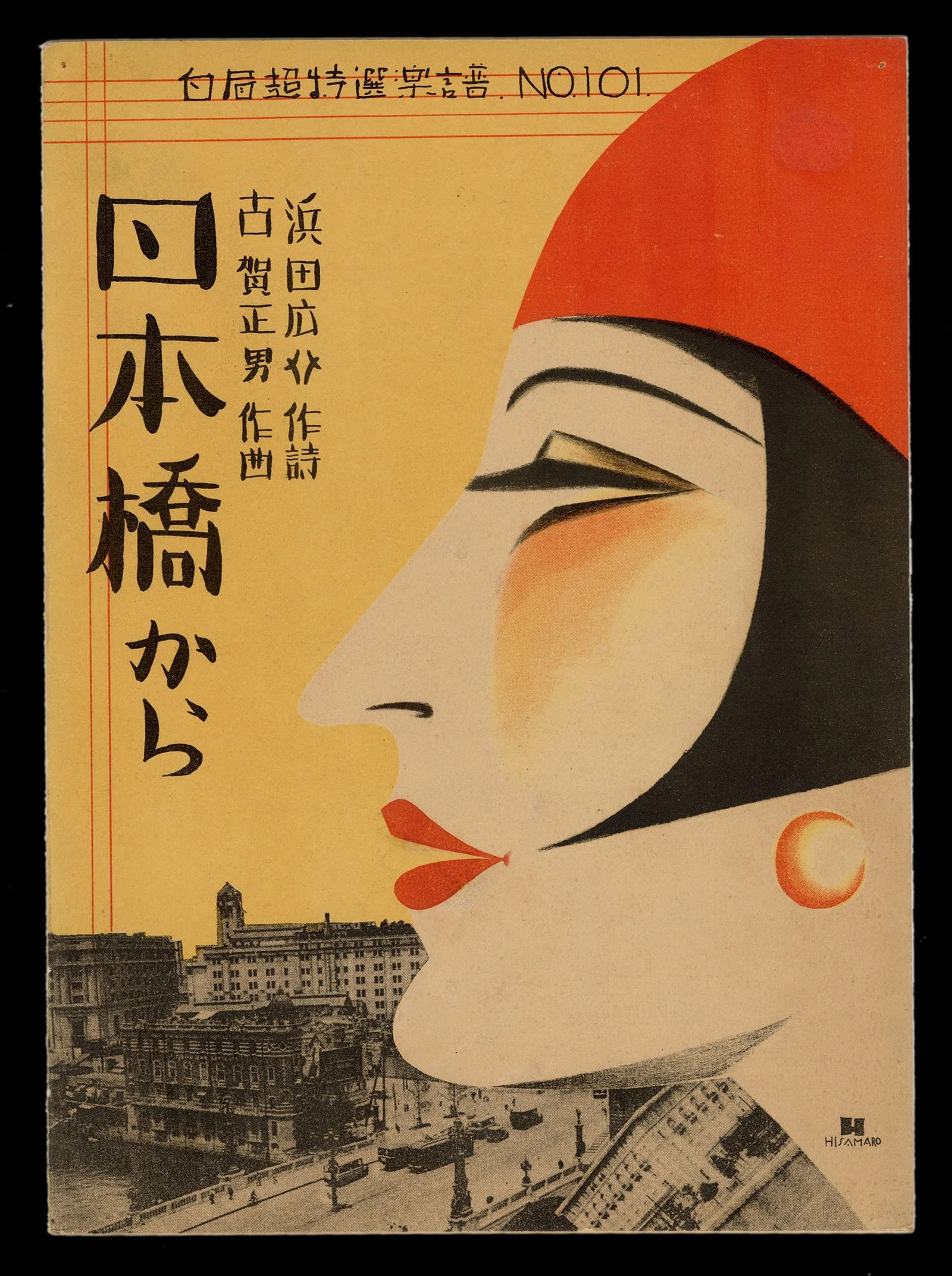
This sophisticated cover combines a boldly stylized female profile with a photographic view of Tokyo’s Nihonbashi district, creating a compelling dialogue between illustration and modern urban reality. The woman’s face dominates the composition, rendered in elegant planes of cream, black, and vermilion, while beneath her stretches a photographic panorama of one of Tokyo’s most important commercial centers. The juxtaposition reflects the growing influence of advertising, magazines, and modern graphic design during the early Shōwa period.
Nihonbashi occupied a unique place within the Japanese imagination. Long regarded as the symbolic center of the nation’s road network, by the 1930s it had become a thriving district of department stores, offices, and modern commerce. The cover suggests that the modern woman and the modern city were inseparable, each shaping the identity of the other. Fashion, transportation, and consumer culture converge here into a single image of urban sophistication.
Connoisseur's Note
This cover stands as an especially vivid document of Tokyo’s transformation during the reconstruction era that followed the Great Kantō Earthquake. The combination of photographic imagery and modern illustration reveals how artists sought new visual strategies to capture the changing face of the metropolis. The city itself becomes a protagonist, embodying progress, ambition, and modern life.
Japan’s extraordinarily high level of music literacy meant that sheet music circulated widely among all segments of society. Publications such as this introduced popular songs while simultaneously familiarizing audiences with new fashions, urban landscapes, and cultural aspirations. As a result, sheet music covers became some of the most effective visual ambassadors of modern Japan.