

 Image 1 of 1
Details
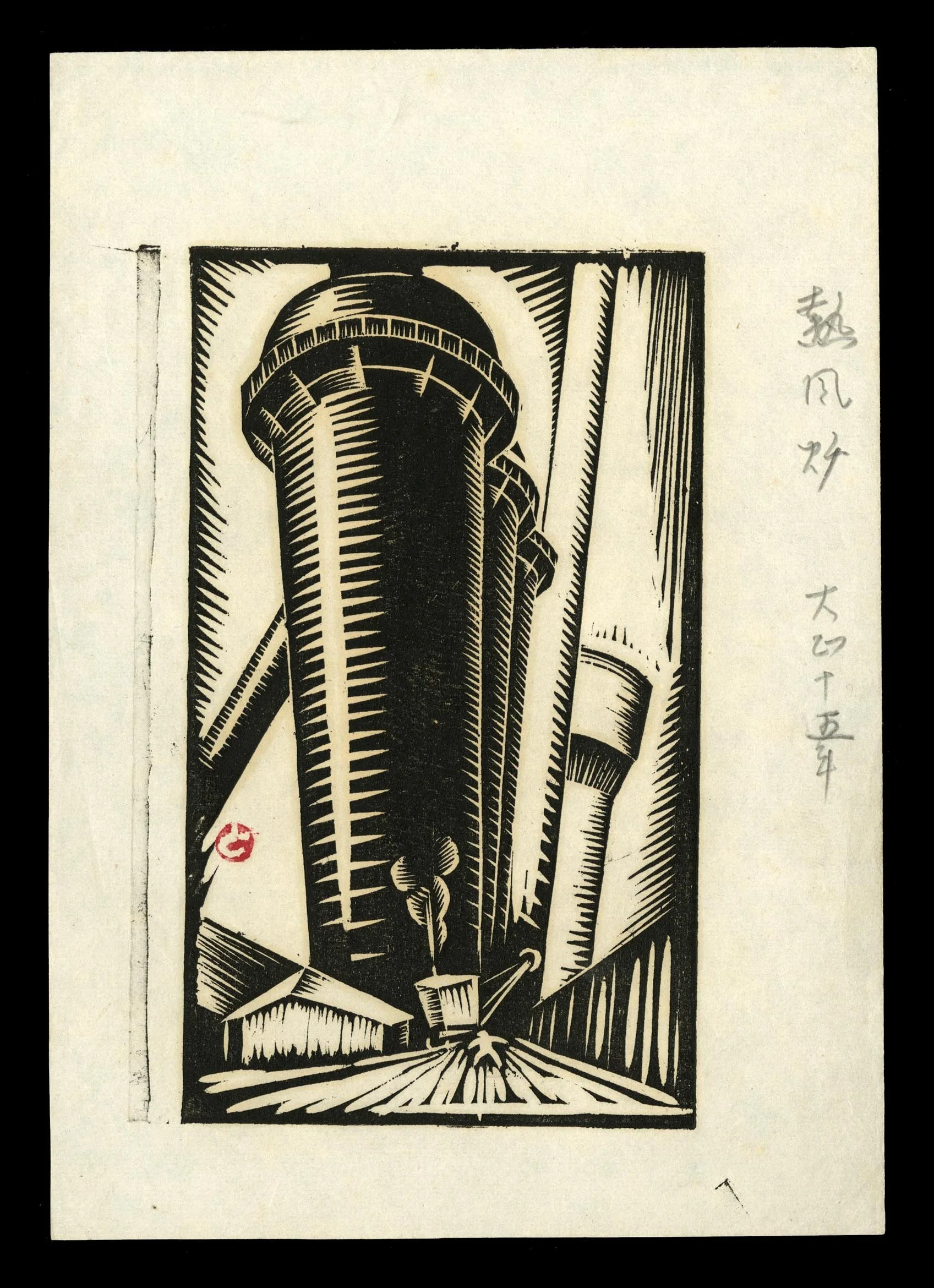
Produced in 1926, Factory Smokestack presents an imposing industrial tower rendered through sharply carved black-and-white contrasts and dynamic geometric abstraction. Rising dramatically upward from a compressed urban foreground, the smokestack dominates the composition like a modern monument. Angular beams, pipes, and architectural supports intersect around the central structure, creating a powerful visual rhythm that transforms industrial machinery into a near-architectural abstraction.
The composition reflects the rapidly modernizing environment of post-earthquake Tokyo and the expanding industrial centers of early Shōwa Japan. Factories, electrical systems, and heavy industry increasingly shaped the visual reality of the modern city, replacing older wooden neighborhoods with steel frameworks and mechanized infrastructure. Inagaki approaches these subjects not as incidental background scenery, but as worthy primary motifs for artistic exploration.
Particularly compelling is the print’s engagement with international Art Deco design. The towering cylindrical smokestack, streamlined contours, radiating linear patterns, and dramatic perspective echo the machine-age aesthetics emerging across Europe and America during the 1920s. Yet despite these cosmopolitan influences, the print remains firmly rooted within the handmade philosophy of the sōsaku hanga movement. Every carved line retains the immediacy of the artist’s hand, balancing industrial modernity with tactile artisanal expression.
Unlike the nostalgic landscapes favored by many shin hanga artists, Inagaki’s composition embraces the contemporary city directly and without sentimentality. The smokestack rises not as a symbol of pastoral intrusion, but as an emblem of modern life itself—bold, mechanical, ambitious, and slightly overwhelming. The severe contrasts between black ink and untouched paper heighten the monumentality of the structure while creating a dramatic nocturnal atmosphere suggestive of smoke, steel, and illuminated machinery.
Connoisseur's Note
This print stands among the most compelling examples of Inagaki’s early industrial imagery, created before the artist became internationally associated with his celebrated animal and cat designs. Works from this experimental period are exceptionally scarce and reveal a younger artist deeply engaged with the visual language of modernism and the changing urban landscape surrounding him.
The smokestack itself functions almost as a modern tower or obelisk, transforming industrial architecture into a symbol of technological aspiration. Its exaggerated verticality evokes the psychological atmosphere of the modern metropolis—a world increasingly shaped by machinery, communication systems, factories, and mass production. Inagaki captures this transformation with remarkable economy, reducing the city to essential structural forms while preserving a sense of immense physical presence.
The print also reflects the broader ambitions of the sōsaku hanga movement during the 1920s, when artists sought to redefine woodblock printmaking as a medium capable of expressing contemporary experience rather than reproducing historical conventions. Industrial subjects such as factories, railways, and urban infrastructure became central to this evolving artistic vocabulary. Inagaki’s composition exemplifies this shift beautifully, presenting modern industry not as a background detail, but as a defining visual reality of the age.
Today, Factory Smokestack remains an important document of Japanese urban modernism and an exceptional example of early sōsaku hanga experimentation. Its bold graphic reduction, machine-age dynamism, and uncompromising embrace of industrial subject matter place it among the most visually arresting modernist prints of the period.
More prints by Tomoo Inagaki:

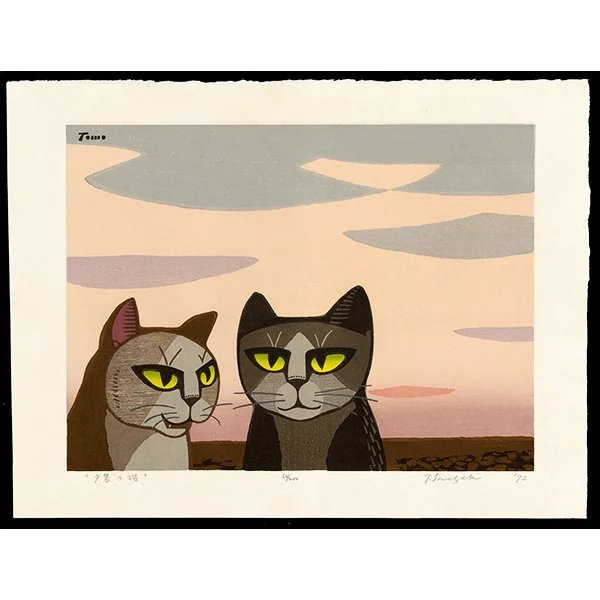
1929
RESERVED
Tokyo Station in Snow
Tomoo Inagaki (1902–1980)
MEDIUM: Woodblock print
DATE: 1929
DIMENSIONS: 8 × 6 ½ inches
CONDITION: Excellent, no problems to note
NOTE: Rare early work
$950.00 <RESERVED>