

 Image 1 of 1
Details
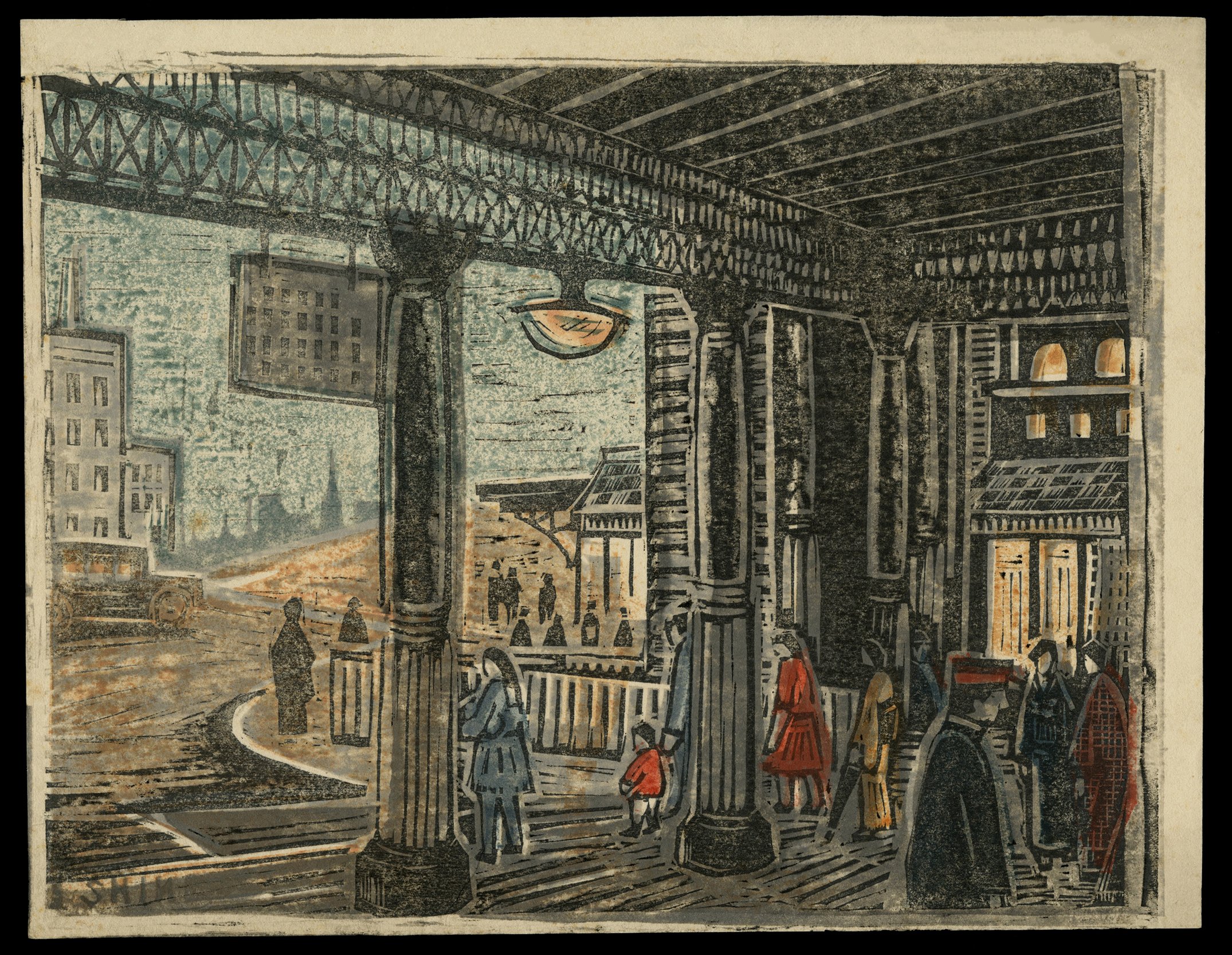
This striking print by Shintaro Takeda presents the interior approach to a busy train station rendered through a dense network of iron columns, overhead beams, and receding architectural space. Beneath the dark canopy of the station structure, figures move across platforms and stairways while distant city buildings emerge through a pale atmospheric haze beyond the tracks. The composition is animated by subtle moments of daily life: women and children gather near the stair rails, pedestrians drift through the station concourse, and a motorcar appears faintly at left along the curving street outside. The entire scene conveys the restless circulation of urban modernity during the final years of the Taishō period.
The station itself functions as both architectural subject and symbolic threshold. By 1920, railway travel had become one of the defining experiences of modern Japanese life, reshaping the relationship between city centers, suburbs, commerce, and leisure. Takeda emphasizes this transformation through the monumental steel framework dominating the composition. The iron columns and elevated trusses create a powerful structural rhythm that contrasts with the smallness and transience of the human figures moving beneath them. Unlike earlier Japanese prints focused on famous landscapes or theatrical subjects, this work turns attention toward the engineered environments increasingly shaping everyday experience in modern cities.
The print’s atmosphere is equally compelling. Light filters through the station with a smoky softness that blurs distinctions between interior and exterior space, while muted grays and earth tones are punctuated by restrained touches of red and blue in the clothing of passing figures. These selective accents guide the eye gently through the composition without disturbing its subdued tonal harmony. Takeda’s use of rough-hewn carving and layered textures reinforces the physical density of the station environment, allowing the architectural structure itself to feel almost tactile.
Connoisseur's Note
The compositional complexity of this print reveals the ambitious formal experimentation taking place within early Sosaku Hanga during the 1910s and 1920s. Takeda constructs the image through intersecting verticals, diagonals, and receding planes that draw the viewer deep into the station interior while simultaneously flattening portions of the space into decorative pattern. The iron latticework overhead becomes nearly abstract in places, transforming industrial architecture into a rhythmic graphic surface. This synthesis of spatial depth and planar design reflects the growing engagement of Sosaku Hanga artists with European modernist printmaking and contemporary urban imagery.
Equally notable is the artist’s treatment of anonymity within the modern city. The figures are rendered with remarkable economy, appearing less as individualized portraits than as fleeting presences absorbed into the larger mechanisms of urban circulation. The station becomes a space defined by movement, transition, and temporary encounters rather than permanence. Such imagery reflects broader social transformations occurring in Japanese cities during the Taishō era, when expanding transportation networks altered patterns of labor, consumption, and public life.
More prints by Shintaro Takeda: