

 Image 1 of 1
Details
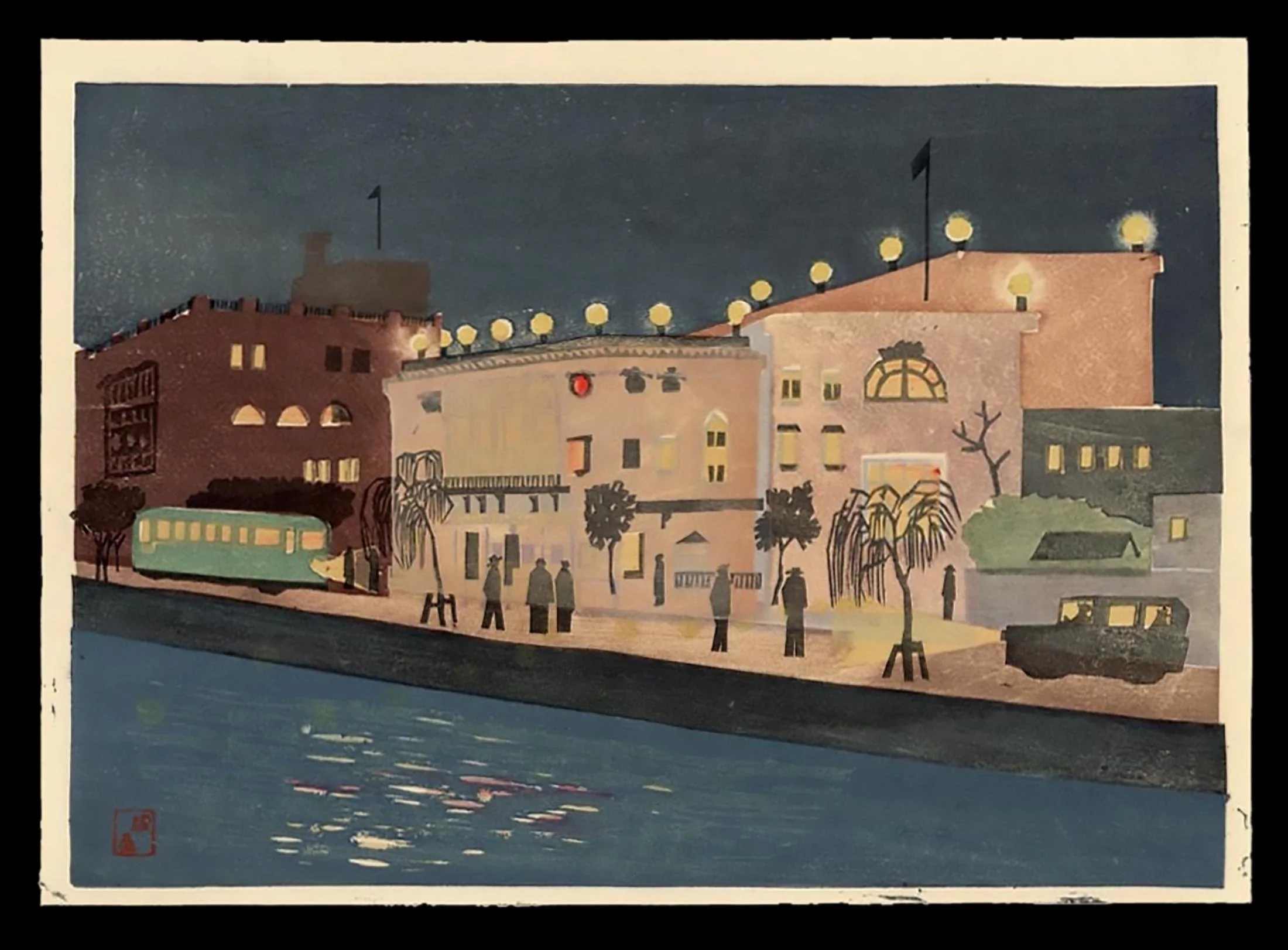
This atmospheric woodblock print by Toshihiko Nomura captures the illuminated modernity of Tokyo’s Marunouchi district during the late 1920s, one of the city’s most symbolically important centers of post-earthquake reconstruction and cosmopolitan development. Seen beneath a deep evening sky, softly glowing buildings line the waterfront while electric streetlamps cast shimmering reflections across the dark canal. Below a cityscape bustling with life, populated with a green streetcar and automobile moving through the composition as silhouetted pedestrians stroll beneath carefully planted roadside trees, embodying the lively rhythm of Tokyo’s expanding urban life.
The design belongs to the important collaborative series Print Collection of Great Tokyo, an ambitious sōsaku hanga project celebrating the rebuilt capital during a period of extraordinary modernization. Following the devastation of the Great Kantō Earthquake of 1923, Tokyo underwent rapid transformation into a modern city defined by widened boulevards, reinforced architecture, electrical illumination, public transportation systems, and Western-inspired commercial districts. Marunouchi in particular emerged as one of the clearest symbols of this new metropolitan identity, with its banks, offices, cafés, and entertainment venues reflecting both economic growth and international cultural aspirations.
Nomura approaches this urban subject with remarkable restraint and sensitivity. Rather than emphasizing crowds or industrial spectacle, he focuses upon atmosphere and light. The softly illuminated façades, simplified silhouettes, and muted reflections create a scene of quiet sophistication. The composition possesses an almost cinematic stillness, where modern architecture and infrastructure become integrated into the contemplative experience of the city at night. The broad horizontal sweep of water in the foreground further enhances the sense of calm urban spaciousness that characterized many reconstruction-era visions of Tokyo.
The print also reveals the distinctly personal character of sōsaku hanga. Unlike the more commercially polished aesthetics of shin hanga, Nomura’s carving and printing preserve a handmade immediacy. Subtle irregularities in line, texture, and color contribute to the emotional resonance of the scene, transforming a modern cityscape into an intimate observation of contemporary life. Tokyo here is not nostalgic Edo, nor an abstract machine-age fantasy, but a living modern environment experienced directly by the artist.
Connoisseur's Note
Night View of Marunouchi stands as an important example of early Shōwa urban modernism within the sōsaku hanga movement. Works from the Print Collection of Great Tokyo are particularly significant because they document how artists of the period interpreted the rebuilt capital not merely as architecture, but as a new psychological and cultural landscape shaped by electricity, transportation, commerce, and cosmopolitan aspiration.
Nomura’s treatment of evening light is especially refined. The glowing orbs of electric lamps, softened reflections on water, and pale illuminated windows evoke the emerging nightlife culture of modern Tokyo—the cafés, theaters, restaurants, and promenades that defined urban leisure during the age of the moga and mobo. Though figures appear only sparingly within the composition, their presence is essential: they animate the city quietly, moving through this carefully ordered modern environment with understated elegance.
The design also reflects the broader ambitions of sōsaku hanga artists during the late 1920s and early 1930s. Many artists associated with the movement sought to capture the immediacy of contemporary life rather than retreat into historical romanticism. In prints such as this, modern Tokyo itself became worthy of poetic contemplation. Electric streetcars, concrete buildings, canals, and illuminated streets emerged as legitimate artistic subjects alongside traditional landscapes and seasonal imagery.
More prints by Toshihiko Nomura: