

 Image 1 of 1
Details
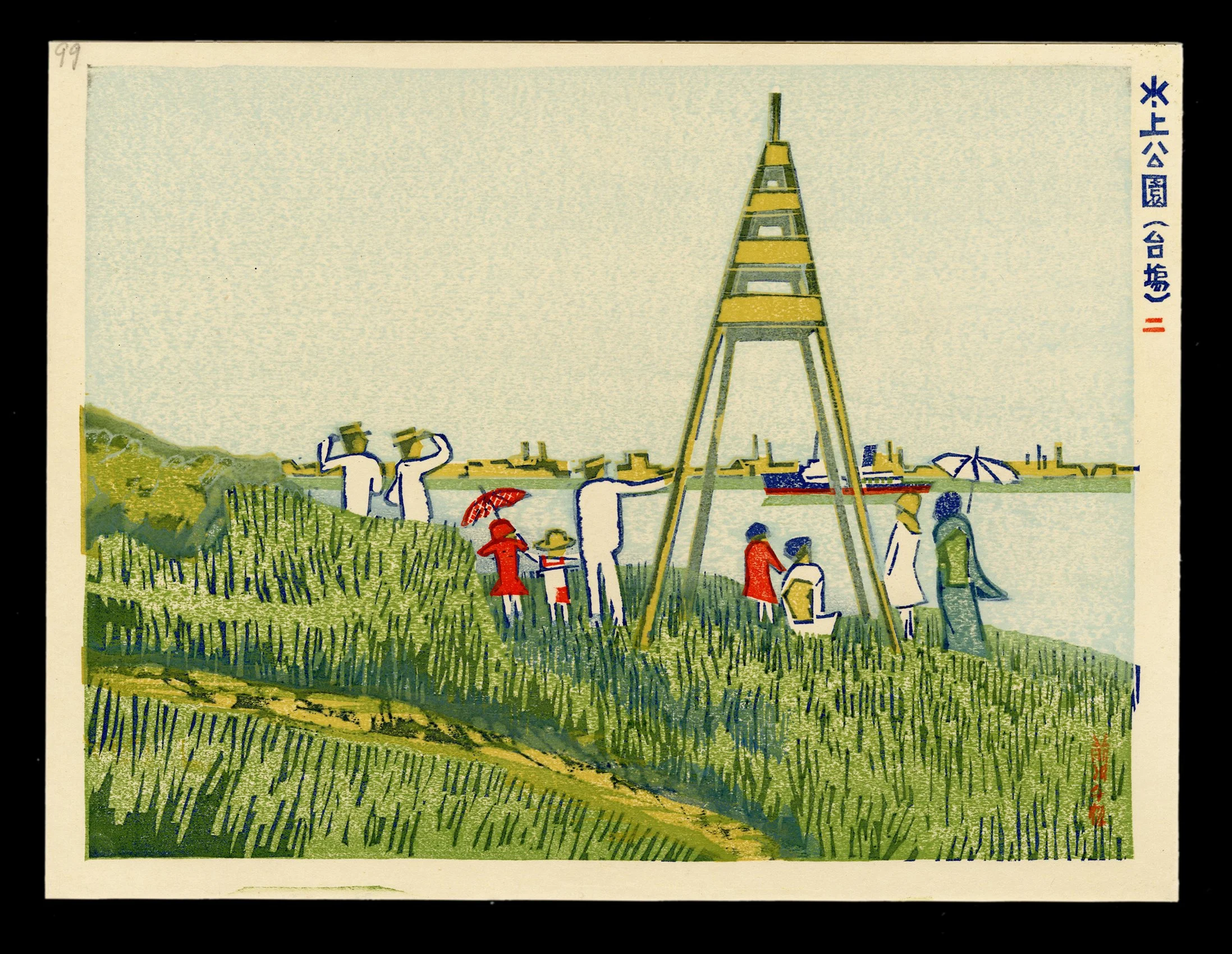
In Suijo Park in Daiba, Maekawa Senpan presents a remarkably sophisticated composition built from sweeping diagonals, open space, and carefully balanced figures dispersed across a grassy shoreline. The viewer’s eye moves effortlessly from the winding foreground path through the tall reeds toward the angular observation tower rising near the water’s edge. Beyond, steamships glide across the bay while the distant industrial shoreline dissolves into pale atmospheric haze. The simplicity of the arrangement conceals an exceptional compositional intelligence, one that transforms an ordinary recreational scene into a work of striking formal elegance.
The print captures the emergence of Tokyo Bay as a modern space of public leisure and urban escape. Small groups of visitors stroll along the waterfront, children pause beneath parasols, and spectators gaze outward toward the harbor traffic. Senpan renders the figures with abbreviated, almost playful silhouettes, allowing gesture and placement to define the rhythm of the scene rather than detailed individuality. The result is an image that feels simultaneously observational and abstracted. Bright accents of red and blue punctuate the subdued greens of the grasslands, creating moments of visual animation that reinforce the leisurely atmosphere of a modern public park shaped for recreation, sightseeing, and social encounter.
Connoisseur's Note
Maekawa Senpan’s background as both a self-taught artist and professional cartoonist gave his work a uniquely accessible sensibility within Sosaku Hanga. His prints frequently balance formal sophistication with an understated lightness of spirit, avoiding the solemnity that often characterized depictions of modern urban transformation. In Suijo Park in Daiba, this quality emerges through the artist’s treatment of scale and spacing. The tiny figures scattered across the landscape appear almost incidental beside the broad openness of the bay, lending the composition a quiet humor and humanity without disrupting its serenity.
The print also reflects changing attitudes toward urban space in interwar Tokyo. Newly reconstructed parks and waterfront promenades became symbols of civic modernization, offering residents opportunities for leisure, movement, and visual escape within an increasingly industrialized metropolis. Rather than portraying the city as crowded or overwhelming, Maekawa emphasizes openness, air, and psychological release. Such imagery reveals an important dimension of early Shōwa modernity: the growing belief that modern life should include not only productivity and infrastructure, but also carefully designed environments for recreation and contemplation.
Only fifty impressions of each design in the One Hundred Views of New Tokyo series were produced, making surviving examples increasingly scarce today. The limited production reflects the highly artisanal nature of the project and the independent ethos central to the Sosaku Hanga movement. Prints from the series are now regarded among the most important visual records of Tokyo’s reconstruction during the interwar period.
More prints by Maekawa Senpan:

1928
$1,200
Picnic
Maekawa Senpan (1888–1960)
MEDIUM: Woodblock print
DATE: 1928
DIMENSIONS: 9 3/8 x 12 1/8 inches
CONDITION: Excellent, no problems to note
$1,200.00