

 Image 1 of 1
Details
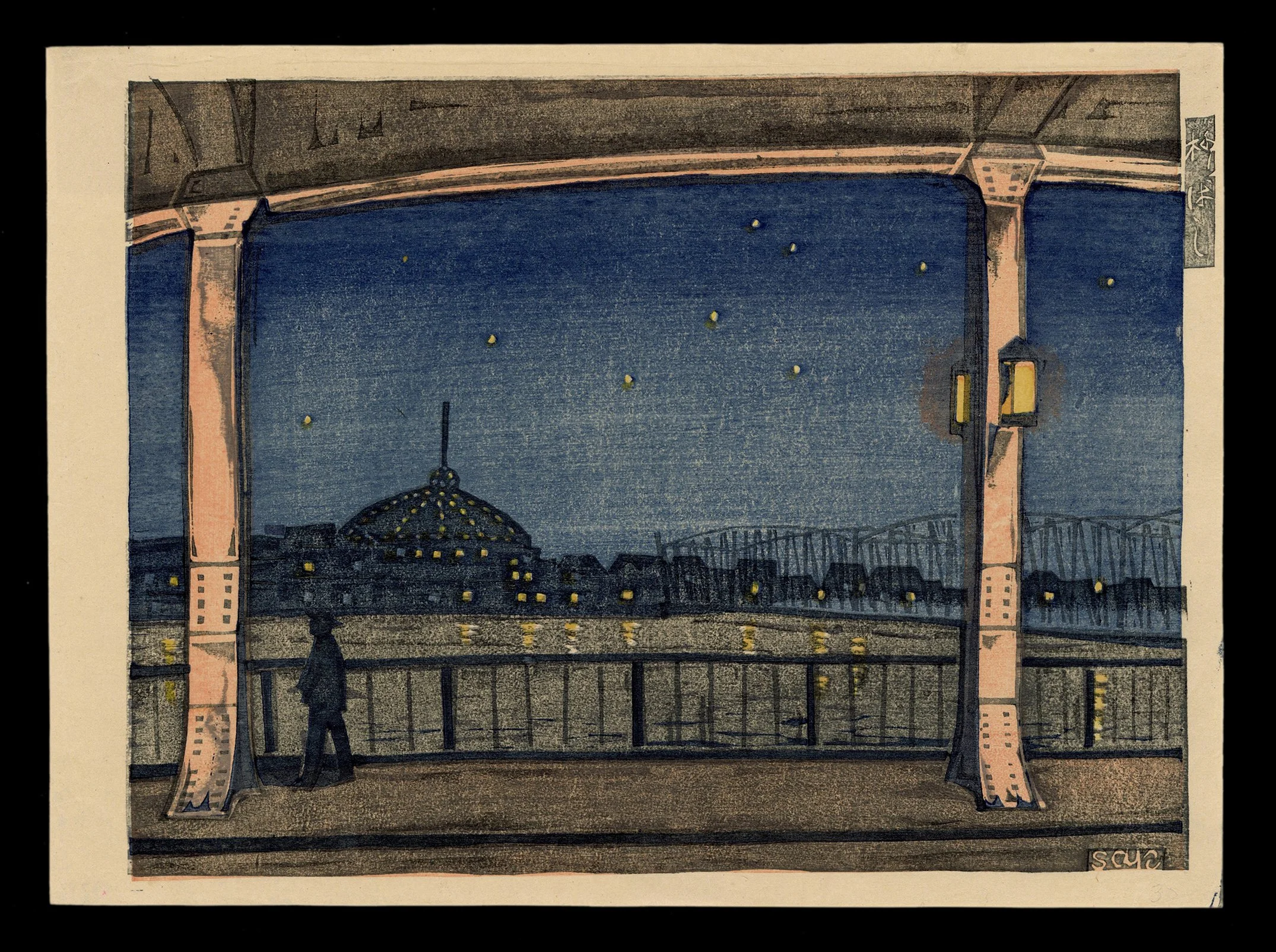
In Yanagibashi Bridge, Sakuichi Fukazawa presents a poetic nocturnal vision of Tokyo’s evolving urban landscape. Framed beneath the steel structure of a bridge, the viewer looks outward across the Sumida River toward softly illuminated buildings and distant architectural silhouettes. The quiet rhythm of glowing lights reflected upon the water transforms the industrial riverscape into an atmosphere of profound stillness and modern beauty.
The composition is carefully structured around the bridge itself. Massive vertical supports divide the scene into measured intervals, creating a visual cadence reminiscent of both modern engineering and traditional Japanese screen composition. A solitary figure walks along the riverside promenade beneath the overhead girders, emphasizing the scale of the rebuilt city while introducing a deeply human note of quiet contemplation.
Bridges occupy a particularly important place within the visual culture of Japan, especially in depictions of Tokyo and Edo. For centuries artists had celebrated the city through its waterways and crossings, from the great ukiyo-e masters of the Edo period to modern printmakers documenting the transformed metropolis of the twentieth century. In Fukazawa’s hands, however, the bridge is no longer simply picturesque infrastructure. It becomes an emblem of reconstruction, movement, and urban modernity. Steel spans, electric lights, and river embankments signal the emergence of a new Tokyo rising from the destruction of the earthquake.
The print captures the unique atmosphere of the late 1920s city, where modern engineering and lingering quietness coexisted side by side. Though firmly rooted in the modern metropolis, the scene retains an understated lyricism through its restrained palette of deep blues, grays, and muted lights. Fukazawa balances the geometry of the rebuilt city with an almost meditative sense of space and silence.
Connoisseur's Note
One Hundred Views of New Tokyo remains one of the defining achievements of the Sosaku Hanga movement. Conceived as a contemporary response to earlier landscape series celebrating Edo, the project sought to document the transformed capital emerging after the Great Kantō Earthquake. Rather than nostalgic views of the old city, the artists depicted bridges, factories, cafés, railway stations, and modern neighborhoods that reflected Tokyo’s rapidly changing identity during the early Shōwa era.
Sakuichi Fukazawa’s contribution to the series is especially admired for its sophisticated handling of mood and architectural space. His compositions often possess a cinematic quality, using framing devices and dramatic perspectives to evoke the emotional experience of moving through the modern city at night. Here, the bridge structure functions not only as subject matter but as a visual threshold between viewer and city.
Only fifty impressions of each design in the One Hundred Views of New Tokyo series were produced, making surviving examples increasingly scarce today. The limited production reflects the highly artisanal nature of the project and the independent ethos central to the Sosaku Hanga movement. Prints from the series are now regarded among the most important visual records of Tokyo’s reconstruction during the interwar period.
More prints by Sakuichi Fukazawa:
1929
$2,500
Yanagibashi Bridge
Sakuichi Fukazawa (1896–1947)
SERIES: One Hundred Views of New Tokyo
MEDIUM: Woodblock print
DATE: 1929
DIMENSIONS: 7 ¾ x 10 ½ inches
CONDITION: Excellent, paper and adhesive remnants on reverse
$2,500.00