

 Image 1 of 2
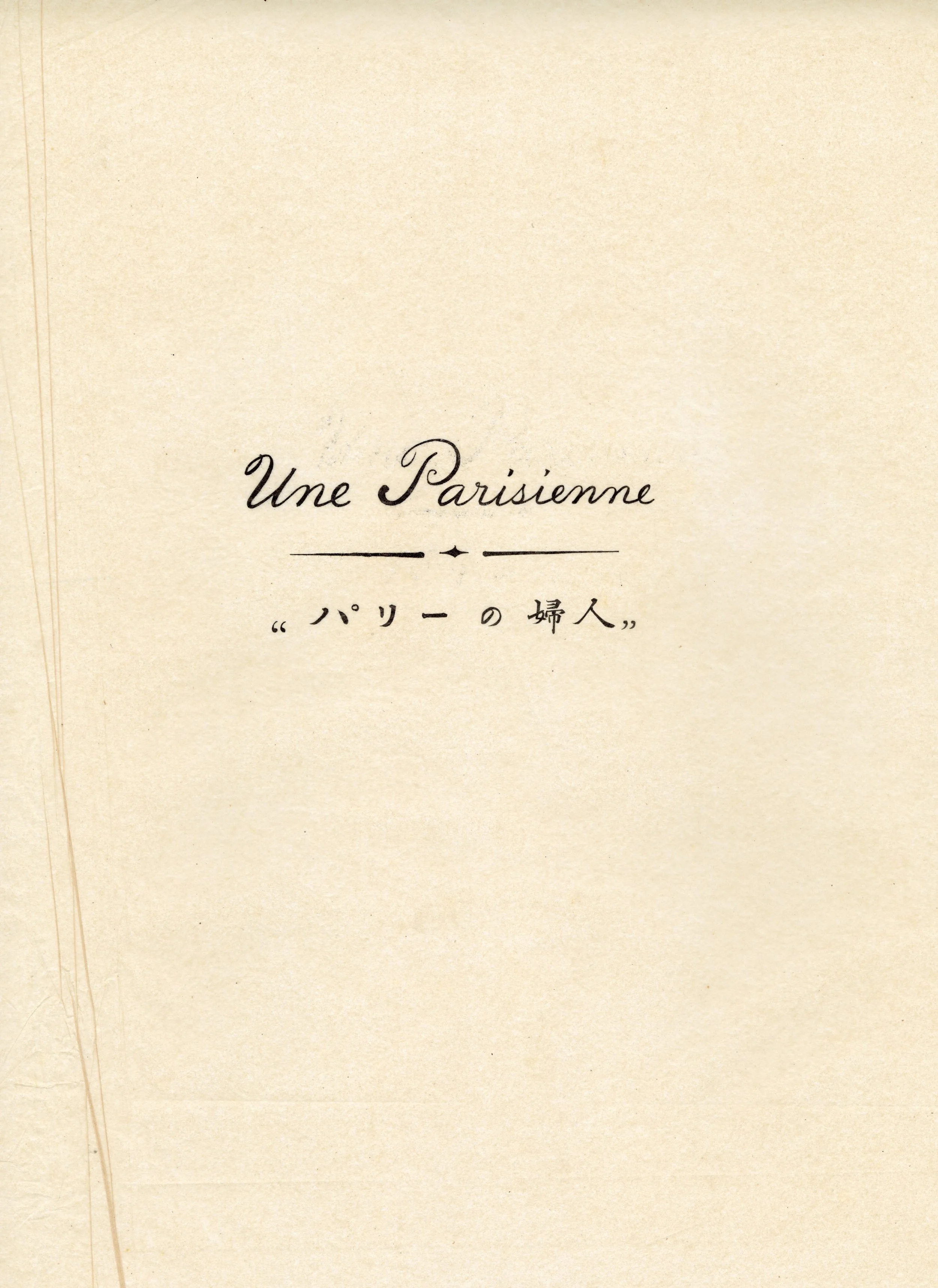 Image 2 of 2
Details
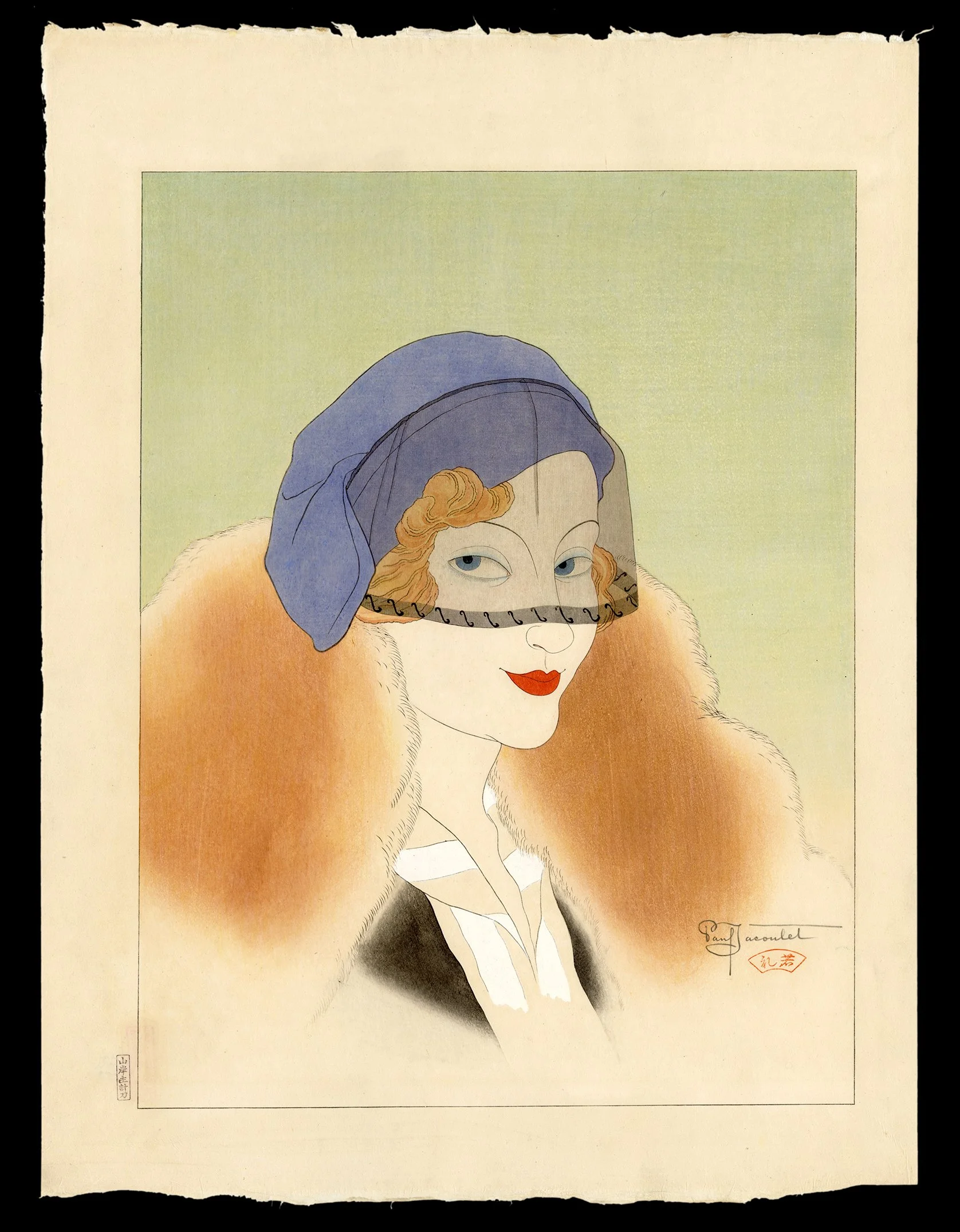
Paul Jacoulet’s Une Parisienne is a masterful meditation on cosmopolitan elegance and the international language of modern fashion during the early Shōwa period. The print depicts a sophisticated Parisian woman enveloped in a luxurious fur collar, her pale face framed by softly curled blonde hair beneath a translucent violet cloche veil. Her sharply defined crimson lips and cool, sidelong gaze project an atmosphere of cultivated refinement associated with European high fashion during the late 1920s and 1930s. Though French in subject, the image resonates profoundly with the visual culture of the moga, whose identity in Japan was shaped largely through fascination with Parisian style, cinema, couture, cosmetics, and café society.
Jacoulet himself occupied a uniquely transnational position within twentieth-century art. Born in France but raised primarily in Japan, he became one of the most technically ambitious woodblock artists of the modern era, synthesizing Japanese craftsmanship with international subject matter and Art Deco sensibilities. By the time Une Parisienne was produced, Tokyo’s Ginza district had become increasingly enthralled by French fashion and continental sophistication. Department stores, illustrated magazines, jazz cafés, and imported films introduced Japanese audiences to a glamorous vision of European modernity, and Paris in particular came to represent the pinnacle of feminine elegance and cosmopolitan taste.
The technical brilliance of the print reflects Jacoulet’s legendary perfectionism. Renowned for producing some of the most technically sophisticated woodblock prints ever created, Jacoulet frequently utilized extraordinarily complex printing processes involving dozens—and occasionally more than one hundred—individual woodblocks to achieve subtle tonal gradations and luxurious textural effects. In Une Parisienne, this meticulous attention to craftsmanship is evident in the delicate transparency of the veil, the feather-soft rendering of the fur collar, and the luminous smoothness of the sitter’s skin. The print possesses an extraordinary tactile refinement rarely encountered within modern printmaking.
Compositionally, the work balances the elegance of Art Deco portraiture with the restraint and spatial sensitivity of Japanese aesthetics. The figure emerges against a softly modulated pale green ground, isolated within an atmosphere of silence and sophistication. Large areas of open space heighten the sitter’s psychological presence while emphasizing the subtle geometry of her attire and posture. The result is an image that feels simultaneously intimate and iconic, preserving the fragile glamour of modern urban identity during the years between the late 1920s and early 1930s.
Connoisseur's Note
Une Parisienne stands among Paul Jacoulet’s most refined explorations of international femininity and modern fashion culture. While Jacoulet is often celebrated for his portraits of figures from Korea, Micronesia, and across the Pacific, works such as this reveal his equally profound fascination with cosmopolitan elegance and the visual language of contemporary style. The print demonstrates his remarkable ability to transform fashion portraiture into an object of extraordinary artistic sophistication.
The image also offers fascinating insight into the reciprocal cultural relationship between Japan and Europe during the early twentieth century. Japanese modern girls frequently modeled themselves after imported French fashions and European beauty ideals appearing in magazines, advertisements, and films. Cloche hats, sheer veils, bobbed hairstyles, cosmetics, and luxurious fur collars became symbols of urban sophistication throughout Tokyo and Osaka. Jacoulet’s Parisian sitter would therefore have appeared deeply relevant to Japanese audiences of the period—not simply as a foreign woman, but as an embodiment of the aspirational modern identity increasingly shaping metropolitan culture.
Collectors particularly prize Jacoulet’s prints for their astonishing technical complexity and immaculate production quality. The extraordinary delicacy of the printing in Une Parisienne demonstrates the height of twentieth-century Japanese woodblock craftsmanship. Every passage—from the nearly transparent veil to the subtle tonal modulation within the fur—reveals an obsessive commitment to refinement that elevated Jacoulet’s works far beyond conventional printmaking.
Beyond its technical mastery, however, the print possesses remarkable emotional subtlety. The sitter’s enigmatic expression and partially obscured gaze create an atmosphere of mystery characteristic of Art Deco illustration and modern fashion photography of the era. Jacoulet captures not merely a fashionable woman, but an entire cosmopolitan ideal shaped by elegance, performance, and modern desire. Seen today, Une Parisienne remains a luminous document of the international currents that connected Paris and Tokyo during one of the most visually sophisticated periods of twentieth-century culture.
More prints by Paul Jacoulet:
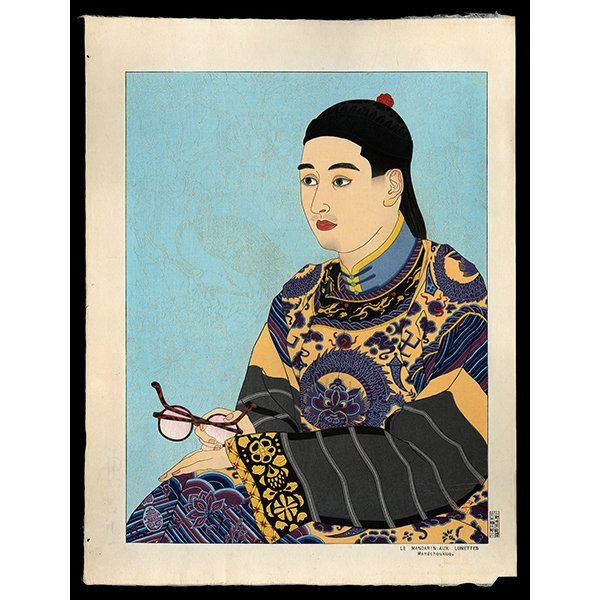
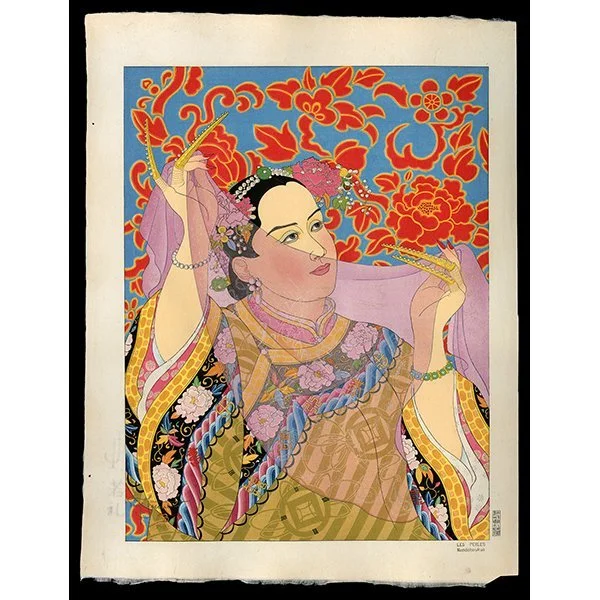
1934
$25,000
Une Parisienne
Paul Jacoulet (1896–1960)
MEDIUM: Woodblock print
DATE: 1934
EDITION: Kanji edition, numbered /150 on reverse
DIMENSIONS: 19 x 14 inches
CONDITION: Exceedingly fine state of preservation with pristine vivid colors
NOTE: Accompanied with rarely seen tissue paper cover baring tittle
LITERATURE: Miles, pl. 6
$25,000.00