

 Image 1 of 1
Details
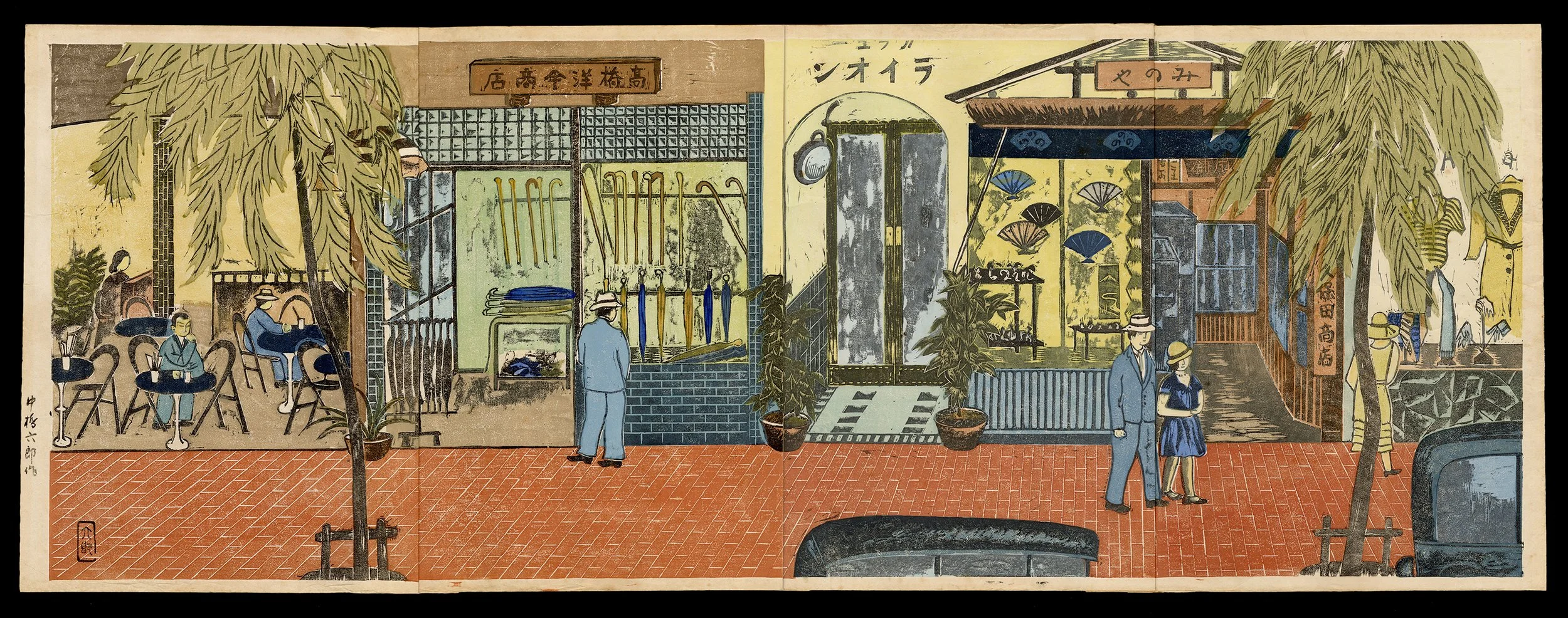
In Ginza Sidewalk, Rokuro Muto transforms the fashionable streets of Ginza into an elegant stage of modern urban life. Extending across four joined panels, the composition unfolds horizontally like a cinematic panorama, guiding the viewer along a broad brick-paved sidewalk lined with cafés, boutiques, decorative shop windows, and gently swaying palm trees. Stylishly dressed pedestrians stroll leisurely beneath the storefronts, while automobiles and glimpses of passing traffic frame the lower edge of the composition. The result is less a conventional city view than an immersive experience of Tokyo’s emerging culture of display, consumption, and fashionable leisure.
The print captures Ginza during its height as the symbolic center of metropolitan sophistication in interwar Japan. Rebuilt extensively following the devastation of the Great Kantō Earthquake, the district evolved into a showcase of modern architecture, Western-inspired commerce, cafés, restaurants, and specialty shops catering to an increasingly urban middle class. Muto carefully emphasizes these new forms of consumer culture through highly descriptive storefront details: umbrellas, imported goods, decorative fans, textiles, and elegant display arrangements transform the street itself into a continuous visual performance.
Particularly striking is the presence of the figures moving through the composition. Men in tailored suits and hats mingle with modern young women dressed in stylish contemporary clothing, embodying the changing rhythms of urban social life. Rather than presenting crowded movement or industrial tension, Muto depicts Ginza as refined, leisurely, and aspirational. The wide sidewalk encourages strolling and looking, recalling the practice of ginbura—the fashionable custom of wandering Ginza simply to see and be seen. In this environment, identity itself becomes performative, shaped through fashion, public appearance, and participation in modern city culture.
Muto’s handling of the quadriptych format reinforces this sense of urban continuity. The eye drifts naturally from one storefront to the next, much as a pedestrian might move through the district itself. The decorative palm trees provide rhythmic intervals across the composition, softening the geometry of the architecture and lending the boulevard an unexpectedly cosmopolitan atmosphere suggestive of café culture, imported luxury, and international modernity. Though executed in the expressive Sosaku Hanga approach, the print retains an unusual delicacy and clarity of line, balancing graphic stylization with observational charm.
Connoisseur's Note
Ginza Sidewalk occupies a distinctive place within early Shōwa-era Sosaku Hanga for both its ambitious scale and its subject matter. Whereas many artists associated with the movement focused on expressive landscapes, labor scenes, or psychologically charged urban imagery, Muto instead offers a carefully orchestrated vision of metropolitan elegance. The print reflects a moment when Ginza had become synonymous with modern taste itself—a district where architecture, commerce, fashion, and social ritual merged into a unified urban spectacle.
The quadriptych format is especially significant. Panoramic multi-sheet compositions of this scale were far more difficult and costly to produce within the Sosaku Hanga tradition, where artists often worked independently and in relatively small editions. The technical challenge of maintaining compositional continuity, tonal consistency, and registration across four separate blocks contributes greatly to the rarity and visual impact of the work. Its expansive horizontal structure also recalls earlier Japanese narrative handscrolls and ukiyo-e polyptychs, reinterpreted here through the language of modern commercial Tokyo.
Equally compelling is the print’s subtle negotiation between Japanese tradition and imported modern culture. The storefront displays, Western fashions, café seating, and tropical palms suggest an internationalized urban environment, yet the measured pacing of the composition and refined restraint of the color palette preserve a distinctly Japanese sensibility of balance and observation. Muto does not depict Ginza as chaotic or overwhelming; instead, he presents it as cultivated and socially theatrical, a place where modernity could be elegantly inhabited.
This impression is particularly notable for its provenance from the Ono Tadashige Museum. The work itself remains quite rare due to its unusually large quadriptych format, making surviving complete impressions exceptionally scarce. Today, Ginza Sidewalk stands as one of the more sophisticated visual documents of Tokyo’s prewar café society and commercial culture, capturing the atmosphere of a city where modern identities unfolded along brightly appointed avenues of glass, fashion, and urban desire.
More prints by Rokuro Muto:
1932
RESERVED
Shinbashi Bridge
Rokuro Muto (1907-1995)
MEDIUM: Woodblock print
DATE: 1932
DIMENSIONS: 11 x 15 ½ inches
CONDITION: Excellent, no problems to note
PROVENANCE: Ono Tadashige Museum
$2,000.00 <RESERVED>