

 Image 1 of 1
Details
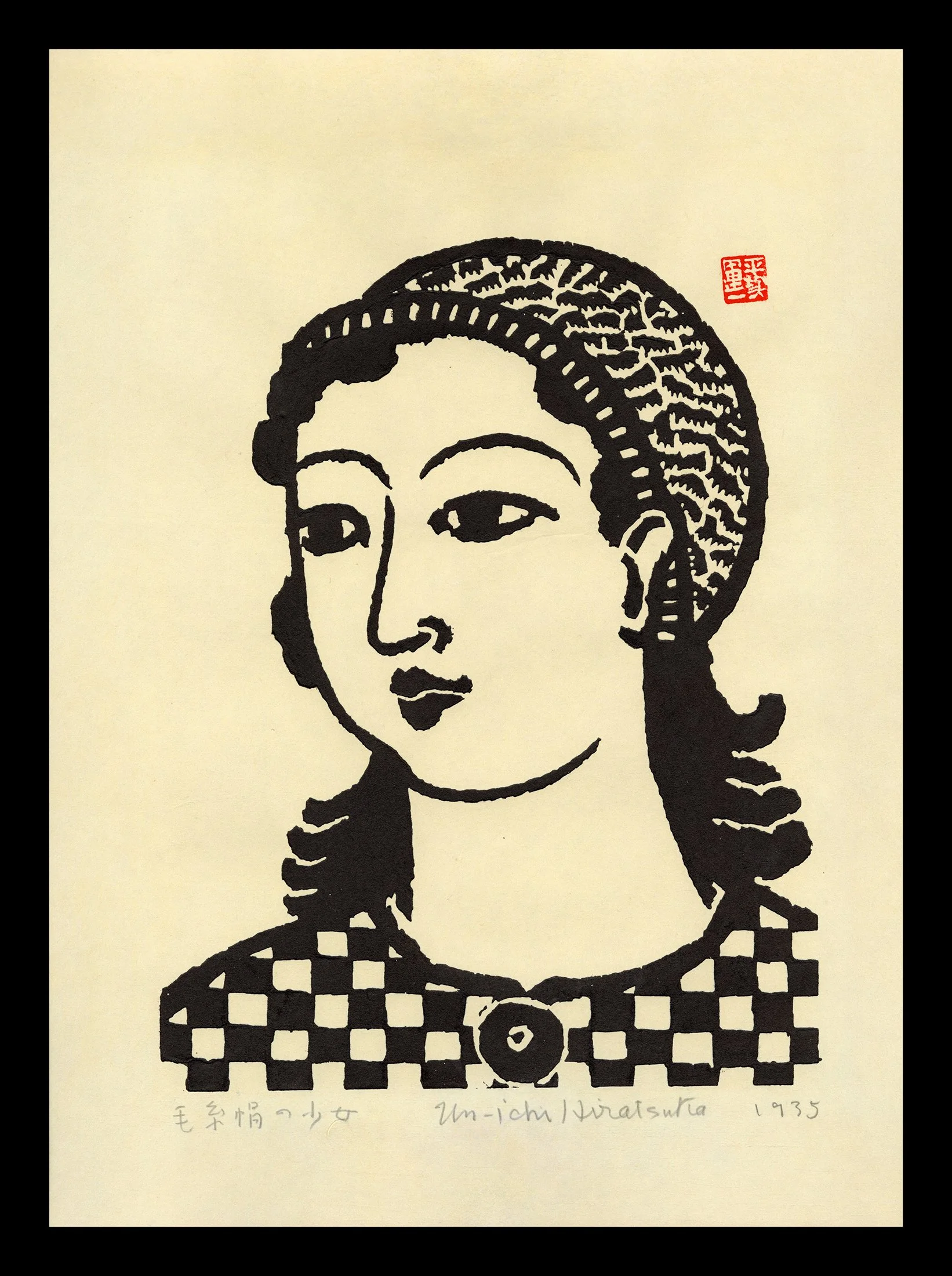
Created in 1935, Girl in Woolen Cap is a striking example of Unichi Hiratsuka’s mature sōsaku hanga style, reducing the portrait of a young woman to a series of bold carved forms and simplified graphic rhythms. The sitter, depicted wearing a patterned woolen cap and checkered garment, emerges through an economy of line that feels simultaneously ancient and modern. Hiratsuka’s heavy black contours dominate the composition, carving the face into an almost sculptural presence against the untouched paper ground.
The subject reflects the evolving image of femininity during the early Shōwa period. Though understated in presentation, the young woman possesses the quiet self-possession associated with the modern girl of the 1930s. Her woolen cap and patterned clothing suggest contemporary urban fashion rather than traditional dress, aligning the work with the increasingly cosmopolitan visual culture emerging throughout Japan during this period. Yet Hiratsuka avoids glamour or theatricality. Instead, he presents the sitter with profound restraint, emphasizing character and inner presence over decorative elegance.
The print exemplifies the ideals of the sōsaku hanga movement, in which the artist personally designed, carved, and printed the image as an expression of individual creativity. Hiratsuka’s carving style is immediately recognizable in the assertive black line and direct physicality of the image. The roughened textures within the cap contrast beautifully with the smooth openness of the face, creating a tension between material density and visual quietness. This balance between expressive force and restraint became one of the defining characteristics of Hiratsuka’s work.
By 1935, Japanese artists were increasingly engaging international modernist aesthetics while simultaneously seeking distinctly personal forms of expression rooted in the woodblock medium itself. Hiratsuka’s simplified treatment of the human figure reflects awareness of modern graphic design and European modernism, yet the composition remains deeply tied to Japanese sensibilities of balance, asymmetry, and spatial calm. The result is a portrait that feels both timeless and unmistakably of its era.
Connoisseur's Note
Girl in Woolen Cap stands as an important example of Hiratsuka’s ability to distill human presence into essential form. Unlike many contemporaneous portrayals of women that emphasized fashionable sophistication or romanticized beauty, Hiratsuka sought psychological directness through radical simplification. The sitter’s expression remains enigmatic—calm, detached, and introspective—allowing the viewer to linger within the quiet emotional space of the portrait.
The work also reveals the broader ambitions of the sōsaku hanga movement during the 1930s. Artists such as Hiratsuka sought to elevate woodblock printing beyond commercial reproduction into a fully modern art form capable of conveying individuality and emotional authenticity. In this regard, the visible hand of the artist becomes central to the work’s meaning. The carved line retains its tactile immediacy, emphasizing the physical act of creation and the intimate relationship between artist and material.
Particularly compelling is the print’s extraordinary graphic strength. The checkerboard garment and woven cap create rhythmic surface patterns that anchor the composition, while the open blankness surrounding the figure intensifies her presence. Hiratsuka demonstrates remarkable confidence in allowing emptiness to function actively within the image, transforming absence into atmosphere.
More prints by Unichi Hiratsuka:
1923
$1,000
Portrait of my Wife, Teruno, 1923
Unichi Hiratsuka (1895–1997)
MEDIUM: Woodblock print
DATE: 1923
DIMENSIONS: 11 ¾ x 8 ½ inches
CONDITION: Excellent, no problems to note
NOTE: Rare early work
LITERATURE: Hiratsuka: Modern Master, pl. 5
$1,000.00