

 Image 1 of 1
CARP (KOI) / Bakufu Ohno
c. 1930s
SOLD
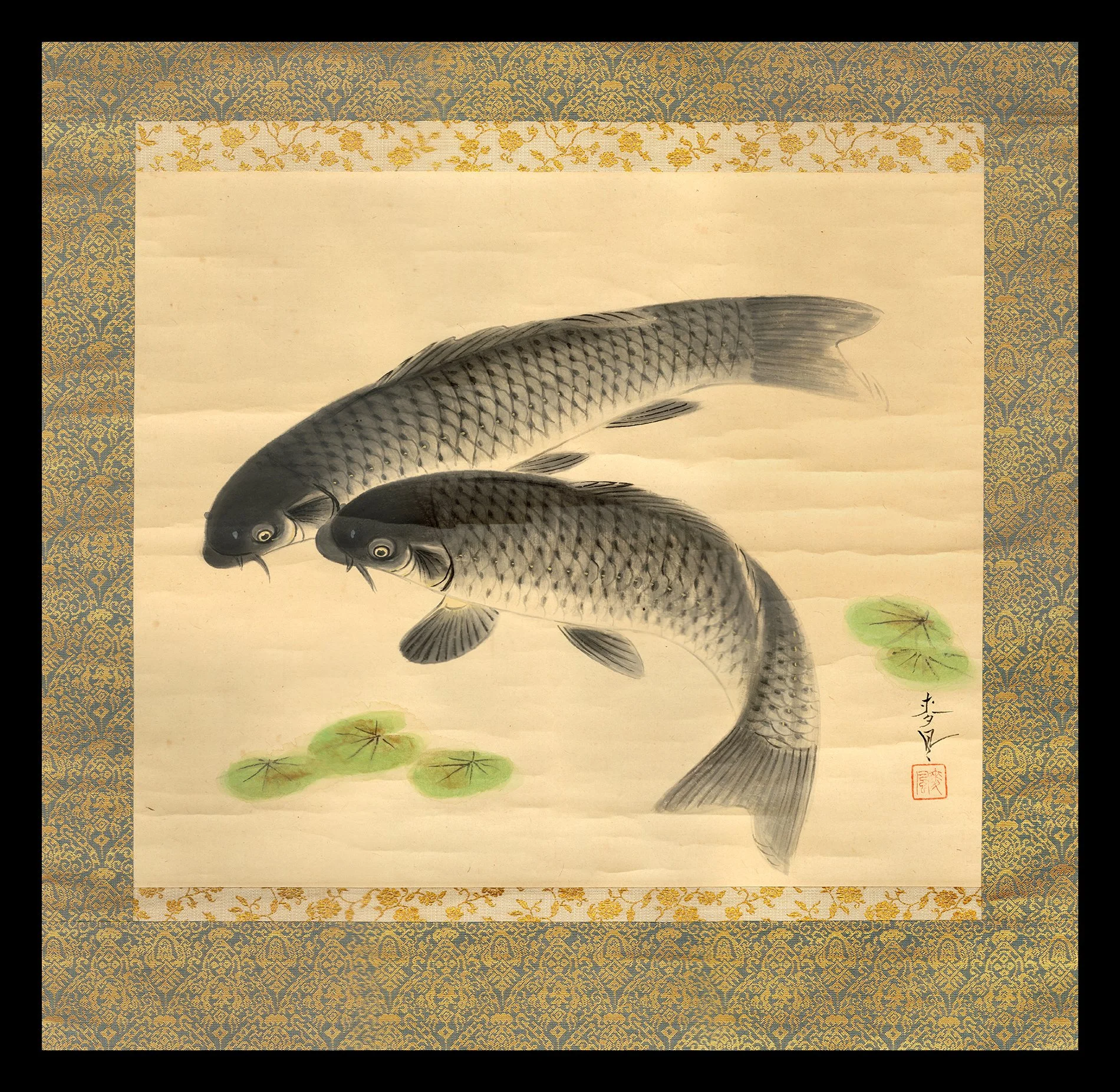
Carp (Koi)
Bakufu Ohno (1888–1976)
MEDIUM: Sumi and mineral pigment on paper
DATE: c. 1930s
DIMENSIONS: 17 × 20 inches (image), 52 x 26 inches with mount
CONDITION: Light staining in image
NOTE: Original painting mounted as a hanging scroll
SOLD
Carp (Koi)
Bakufu Ohno (1888–1976)
MEDIUM: Sumi and mineral pigment on paper
DATE: c. 1930s
DIMENSIONS: 17 × 20 inches (image), 52 x 26 inches with mount
CONDITION: Light staining in image
NOTE: Original painting mounted as a hanging scroll
SOLD
Details
This refined painting depicts two carp moving gracefully through calm water, their powerful forms rendered in subtle gradations of sumi ink accented with delicate mineral pigments. Against a softly modulated background, the fish emerge with remarkable presence, their overlapping scales meticulously articulated through layers of translucent washes and fine brushwork. The restrained monochromatic palette emphasizes volume, texture, and movement, allowing Ohno’s mastery of draftsmanship to take center stage.
Unlike many of the artist's more decorative compositions, the present work possesses a quiet naturalism. The carp appear suspended within an atmosphere of stillness, accompanied only by a few floating lily pads that punctuate the otherwise open composition. The gentle curvature of the bodies creates a rhythmic dialogue between the two fish, while the broad expanses of unoccupied space evoke the depth and serenity of a pond. The result is a work of considerable elegance, balancing scientific observation with the contemplative qualities long associated with Japanese painting.
Connoisseur's Note
This painting is particularly noteworthy for its apparent relationship to Ohno's 1937 woodblock print Carp (Koi) from the celebrated Familiar Fishes of Japan series. The two compositions share the same principal arrangement of paired carp, suggesting that the present work may have served as a preparatory study for the later print. Yet the painting also preserves important elements that were ultimately omitted from the final design, most notably the aquatic vegetation and lily pads that establish a more explicit environmental setting.
Such differences offer valuable insight into Ohno’s creative process. In adapting the composition for woodblock printing, the artist appears to have simplified and refined the image, removing ancillary details in favor of a more concentrated focus on the monumental forms of the fish themselves. The present painting therefore documents a fascinating stage in the evolution of the design, revealing choices made as the composition moved from painted study to finished print. Original paintings by Ohno are considerably rarer than his woodblock prints and works such as this provide collectors and scholars with a rare opportunity to observe the development of some of the artist's most celebrated images while appreciating the immediacy and subtlety of his hand as a painter.
More prints by Bakufu Ohno:
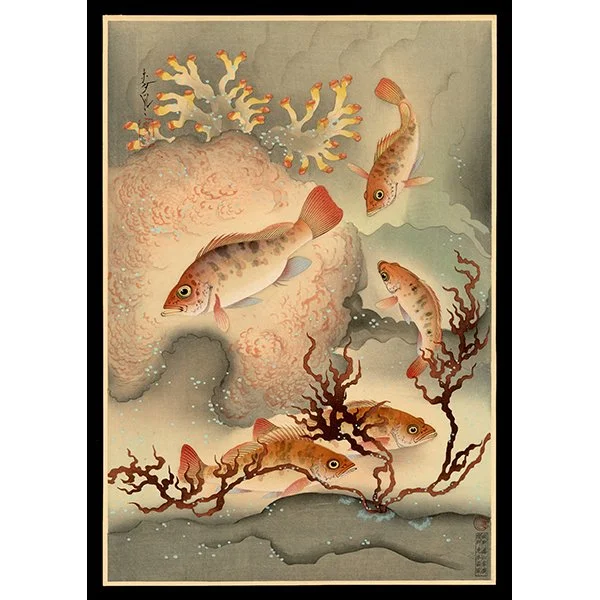
Mebaru (Rockfish)
Bakufu Ohno (1888-1976)
SERIES: Familiar Fishes of Japan; Vol. 1 No. 7
MEDIUM: Woodblock Print
DATE: 1938
DIMENSIONS: 15 5/8 x 11 inches
CONDITION: Excellent; no problems to note
LITERATURE: Reita Hirase, Akira Tomita, Hiroko Shimizu, Art Portfolio of Fishes by Bakufu Ohno, 2013
SOLD
Contact us to purchase
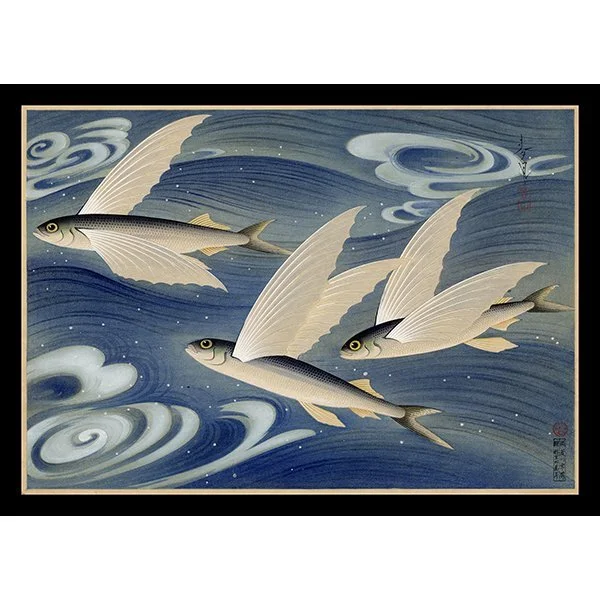
Flying Fishes (Tobiuo)
Bakufu Ohno (1888-1976)
SERIES: Familiar Fishes of Japan
MEDIUM: Woodblock Print
DATE: 1938
DIMENSIONS: 11 x 15 5/8 inches
CONDITION: Excellent; no problems to note—tipped onto original presentation mat; not framed
LITERATURE: Reita Hirase, Akira Tomita, Hiroko Shimizu, Art Portfolio of Fishes by Bakufu Ohno, 2013, pl. 58
SOLD
Contact us to purchase
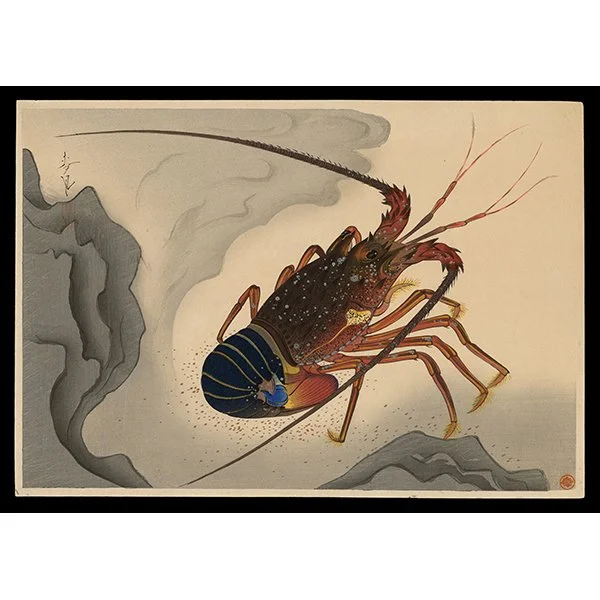
Lobster
Bakufu Ohno (1888–1976)
SERIES: Familiar Fishes of Japan Volume I
MEDIUM: Woodblock Print
DATE: 1938
DIMENSIONS: 11 1/8 × 15 ¾ inches
CONDITION: Excellent; vibrant and vivid colors; no problems to note
NOTE: Second edition
$950.00
Contact us to purchase
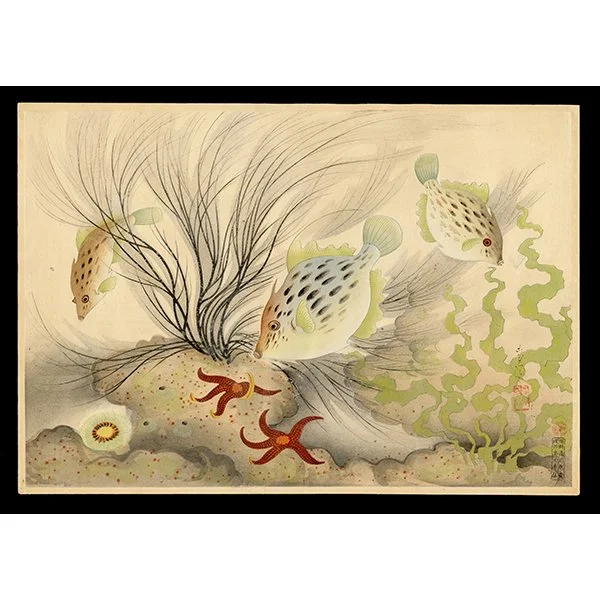
File-Fish (Kawahagi)
Bakufu Ohno (1888–1976)
SERIES: Familiar Fishes of Japan Volume I
MEDIUM: Woodblock Print
DATE: 1938
DIMENSIONS: 11 1/8 × 15 ¾ inches
CONDITION: Excellent; crisp impression with vivid color and silver mica background; no problems to note
NOTE: First edition, with publisher’s circle and rectangular seals
SOLD
Contact us to purchase
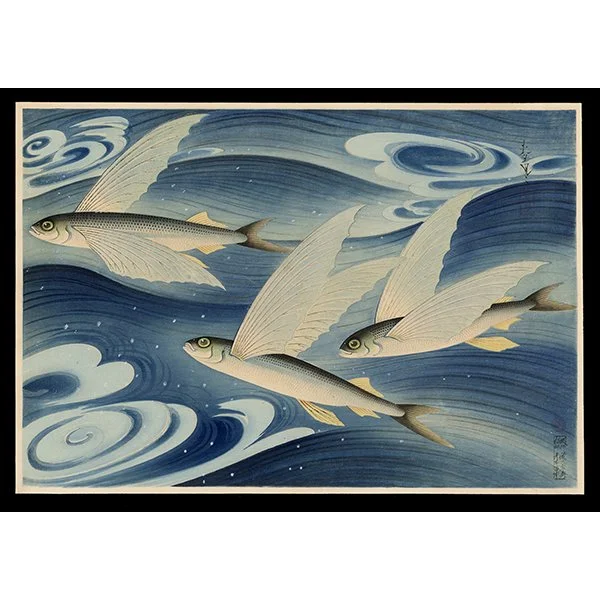
Flying Fish
Bakufu Ohno (1888–1976)
SERIES: Familiar Fishes of Japan Volume I
MEDIUM: Woodblock Print
DATE: 1938
DIMENSIONS: 11 1/8 × 15 ¾ inches
CONDITION: Excellent; crisp impression with vivid color and silver mica highlights; no problems to note
NOTE: First edition, with publisher’s circle and rectangular seals
SOLD
Contact us to purchase
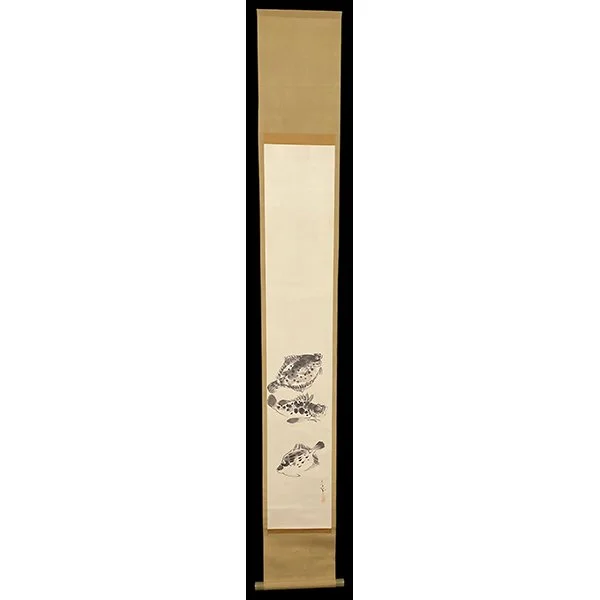
Boxfish
Bakufu Ohno (1888–1976)
MEDIUM: Sumi on paper
DATE: 1940s
DIMENSIONS: 49 × 8 ½ inches (image), 73 × 9 ¾ inches with mount
CONDITION: Excellent; no problems to note
NOTE: Original painting mounted as a hanging scroll
SOLD
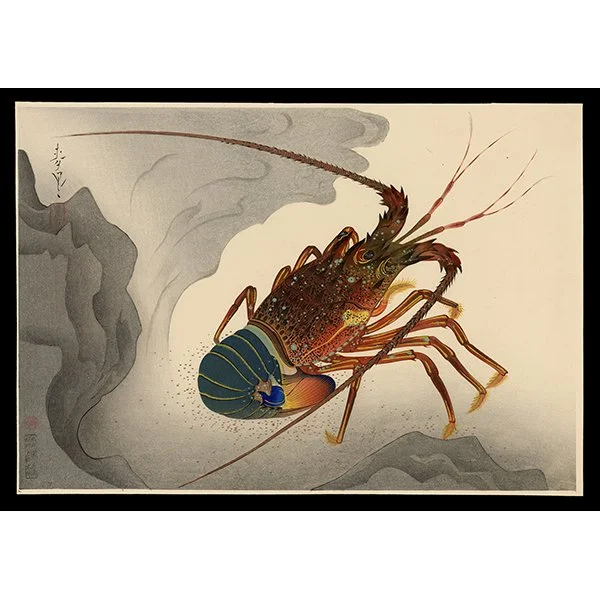
Lobster (Iseebi)
Bakufu Ohno (1888–1976)
SERIES: Familiar Fishes of Japan, Volume I
MEDIUM: Woodblock print
DATE: 1937
DIMENSIONS: 10 × 15 inches
NOTE: First edition; gold metallic pigment
RESERVED
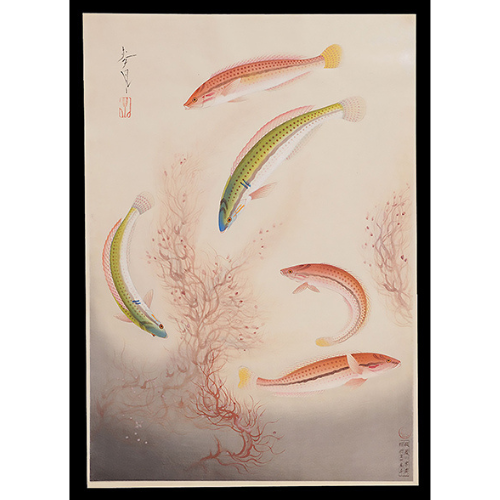
Bera
Bakufu Ohno (1888–1976)
SERIES: Familiar Fishes of Japan, Volume I
MEDIUM: Woodblock print
DATE: 1937
DIMENSIONS: 15 × 10 inches
CONDITION: Excellent; no problems to note
NOTE: First edition; gold and silver metallic pigment
SOLD
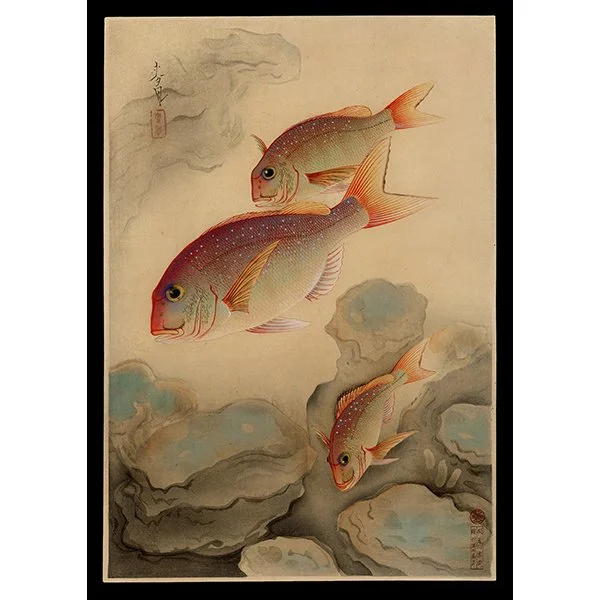
Sea Bream (Tai)
Bakufu Ohno (1888–1976)
SERIES: Familiar Fishes of Japan, Volume I
MEDIUM: Woodblock print
DATE: 1937
DIMENSIONS: 15 × 10 inches
CONDITION: Excellent; no problems to note
NOTE: First edition; gold and silver metallic pigment
SOLD
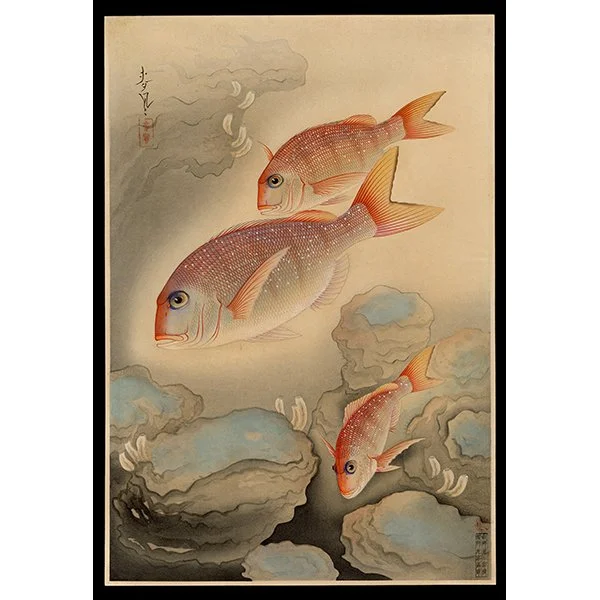
Sea Bream (Tai)
Bakufu Ohno (1888–1976)
SERIES: Familiar Fishes of Japan, Volume I
MEDIUM: Woodblock print
DATE: 1937
DIMENSIONS: 15 × 10 inches
CONDITION: Excellent; no problems to note
NOTE: First edition; gold and silver metallic pigment
SOLD
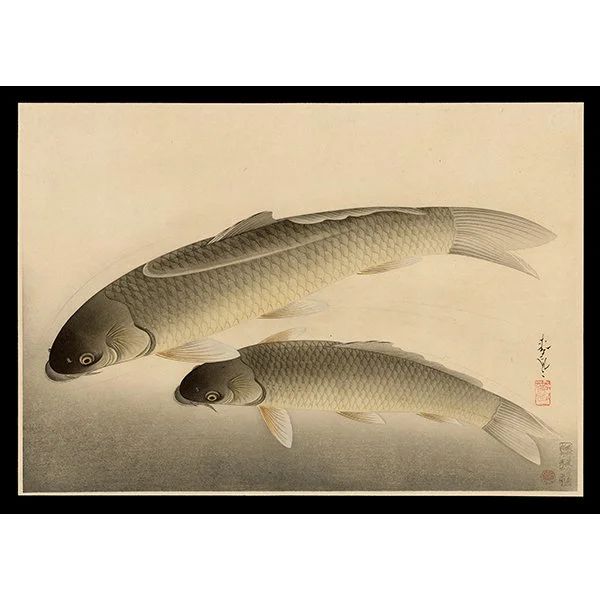
Carp (Koi)
Bakufu Ohno (1888–1976)
SERIES: Familiar Fishes of Japan, Volume I
MEDIUM: Woodblock print
DATE: 1937
DIMENSIONS: 10 × 15 inches
CONDITION: Excellent; no problems to note
NOTE: First edition; gold metallic pigment
SOLD
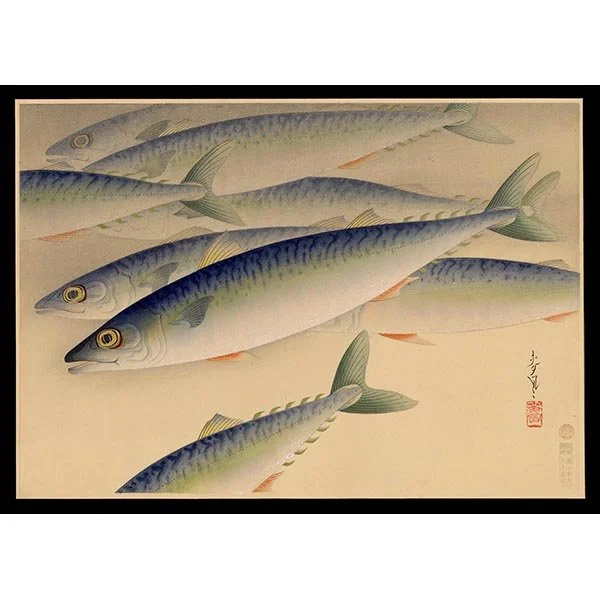
Mackerel (Saba)
Bakufu Ohno (1888–1976)
SERIES: Familiar Fishes of Japan, Volume I
MEDIUM: Woodblock print
DATE: 1937
DIMENSIONS: 10 × 15 inches
CONDITION: Excellent; no problems to note
NOTE: First edition; silver metallic pigment
SOLD
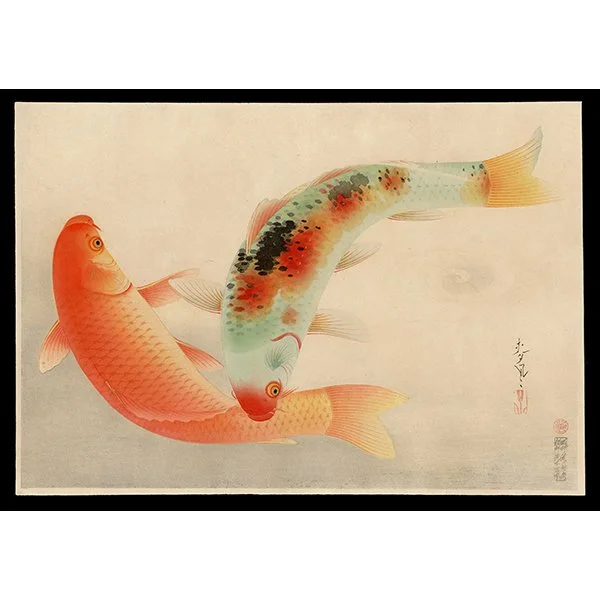
Brocade Carp (Higoi)
Bakufu Ohno (1888–1976)
SERIES: Familiar Fishes of Japan, Volume I
MEDIUM: Woodblock print
DATE: 1937
DIMENSIONS: 10 × 15 inches
CONDITION: Excellent; no problems to note
NOTE: First edition; gold metallic pigment
SOLD
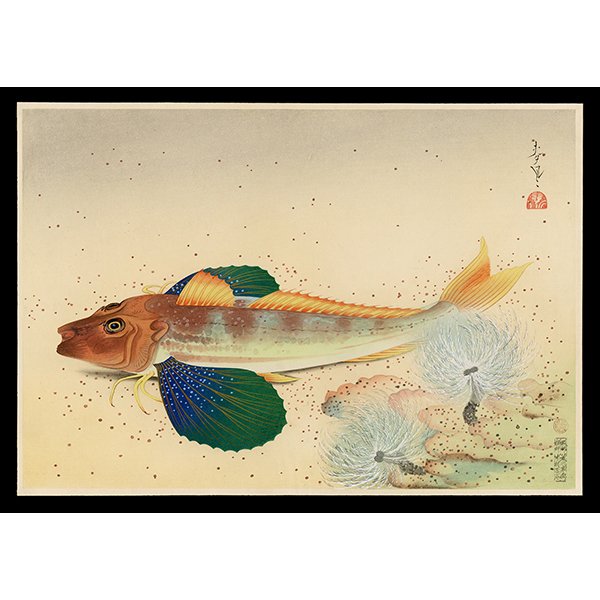
Sea Robin (Hobo)
Bakufu Ohno (1888–1976)
SERIES: Familiar Fishes of Japan, Volume I
MEDIUM: Woodblock print
DATE: 1937
DIMENSIONS: 10 × 15 inches
CONDITION: Excellent; no problems to note
NOTE: First edition; gold metallic pigment
SOLD
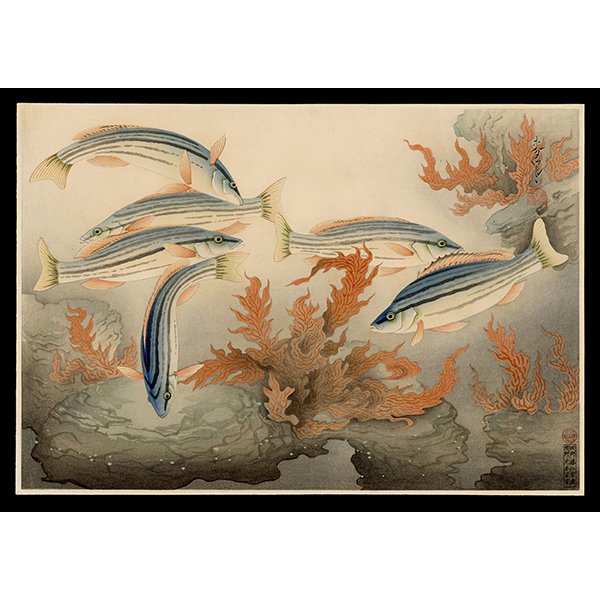
Striped Isagi (Shimaisagi)
Bakufu Ohno (1888–1976)
SERIES: Familiar Fishes of Japan, Volume I
MEDIUM: Woodblock print
DATE: 1937
DIMENSIONS: 10 × 15 inches
CONDITION: Excellent; no problems to note
NOTE: First edition; silver and gold metallic pigment
SOLD
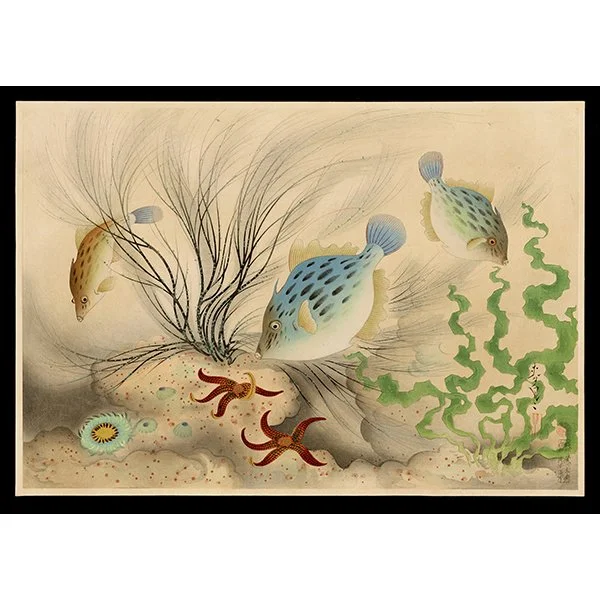
File-Fish (Kawahagi)
Bakufu Ohno (1888–1976)
SERIES: Familiar Fishes of Japan, Volume I
MEDIUM: Woodblock print
DATE: 1938
DIMENSIONS: 10 × 15 inches
CONDITION: Excellent; no problems to note
NOTE: First edition; silver metallic pigment
SOLD
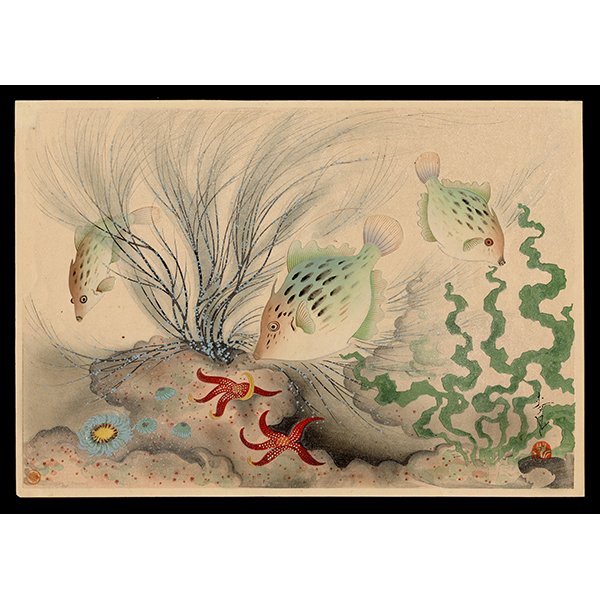
File-Fish (Kawahagi)
Bakufu Ohno (1888–1976)
SERIES: Familiar Fishes of Japan, Volume I
MEDIUM: Woodblock print
DATE: 1938
DIMENSIONS: 10 × 15 inches
CONDITION: Excellent; no problems to note
NOTE: Early second edition; silver metallic pigment
SOLD
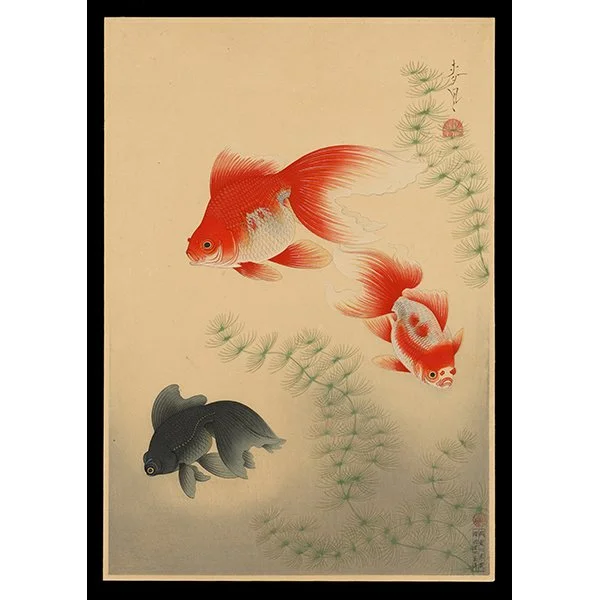
Goldfish (Kingyo)
Bakufu Ohno (1888–1976)
SERIES: Familiar Fishes of Japan, Volume I
MEDIUM: Woodblock print
DATE: 1938
DIMENSIONS: 15 × 10 inches
CONDITION: Excellent; no problems to note
NOTE: First edition; silver metallic pigment
SOLD
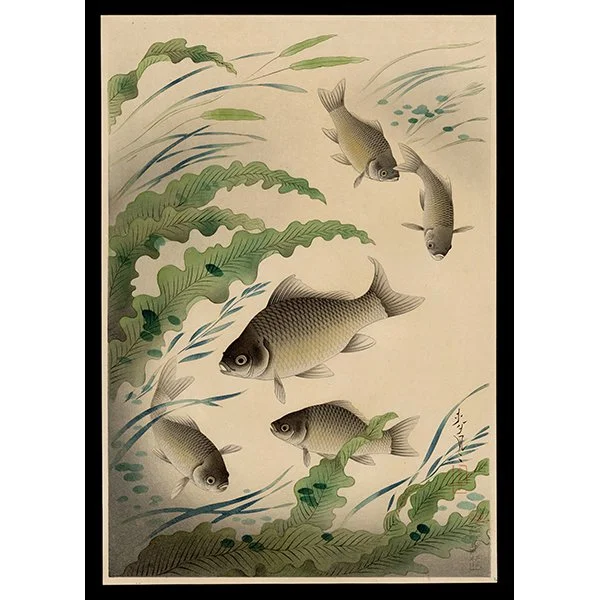
Crucian (Funa)
Bakufu Ohno (1888–1976)
SERIES: Familiar Fishes of Japan, Volume I
MEDIUM: Woodblock print
DATE: 1938
DIMENSIONS: 15 × 10 inches
CONDITION: Excellent; no problems to note
NOTE: First edition; gold metallic pigment
SOLD
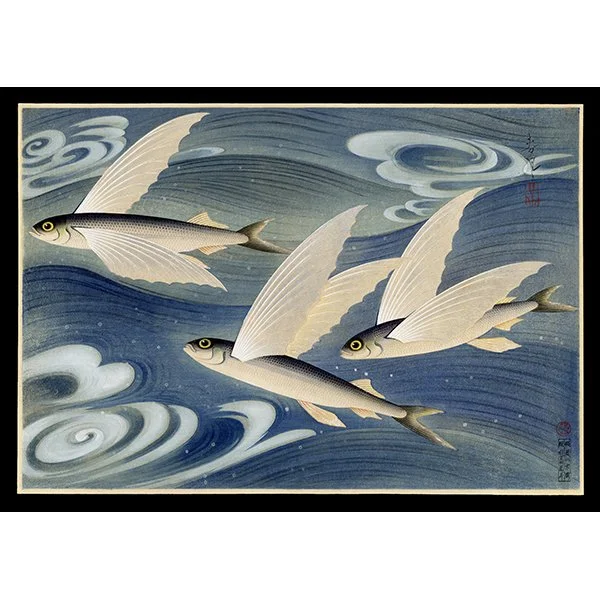
Flying Fish (Tobiuo)
Bakufu Ohno (1888–1976)
SERIES: Familiar Fishes of Japan, Volume I
MEDIUM: Woodblock print
DATE: 1938
DIMENSIONS: 10 × 15 inches
CONDITION: Excellent; no problems to note
NOTE: First edition; silver metallic pigment
SOLD
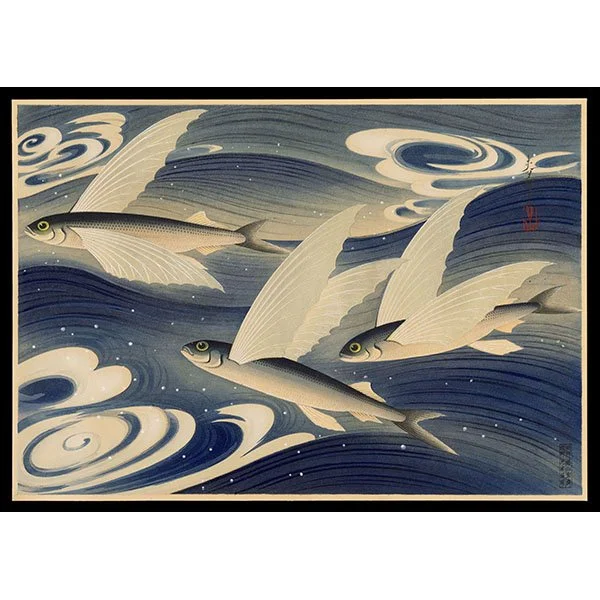
Flying Fish (Tobiuo)
Bakufu Ohno (1888–1976)
SERIES: Familiar Fishes of Japan, Volume I
MEDIUM: Woodblock print
DATE: 1938
DIMENSIONS: 10 × 15 inches
CONDITION: Excellent; no problems to note
NOTE: First edition; silver metallic pigment
SOLD
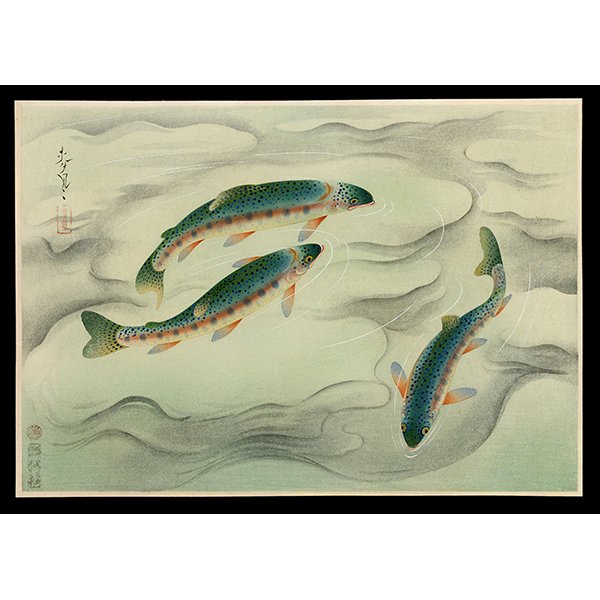
Rainbow Trout (Nijimasu)
Bakufu Ohno (1888–1976)
SERIES: Familiar Fishes of Japan, Volume I
MEDIUM: Woodblock print
DATE: 1938
DIMENSIONS: 10 × 15 inches
CONDITION: Excellent; no problems to note
NOTE: First edition; silver metallic pigment
SOLD
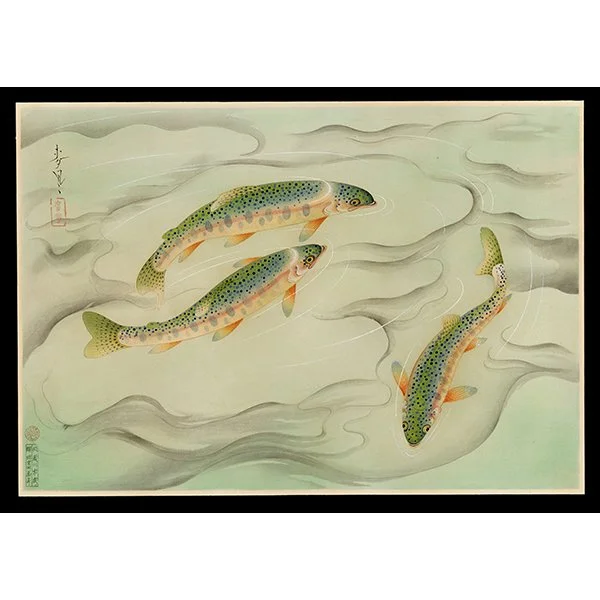
Rainbow Trout (Nijimasu)
Bakufu Ohno (1888–1976)
SERIES: Familiar Fishes of Japan, Volume I
MEDIUM: Woodblock print
DATE: 1938
DIMENSIONS: 10 × 15 inches
CONDITION: Excellent; no problems to note
NOTE: First edition; silver and gold metallic pigment
SOLD
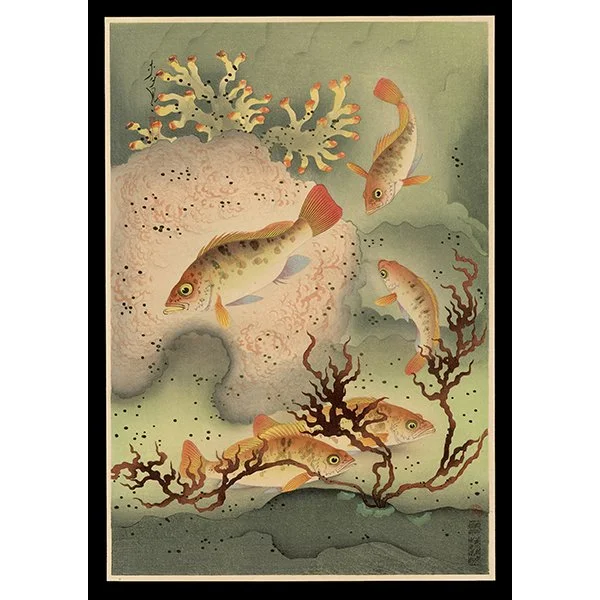
Rockfish (Mebaru)
Bakufu Ohno (1888–1976)
SERIES: Familiar Fishes of Japan, Volume I
MEDIUM: Woodblock print
DATE: 1938
DIMENSIONS: 10 × 15 inches
CONDITION: Excellent; no problems to note
NOTE: First edition; silver metallic pigment
SOLD
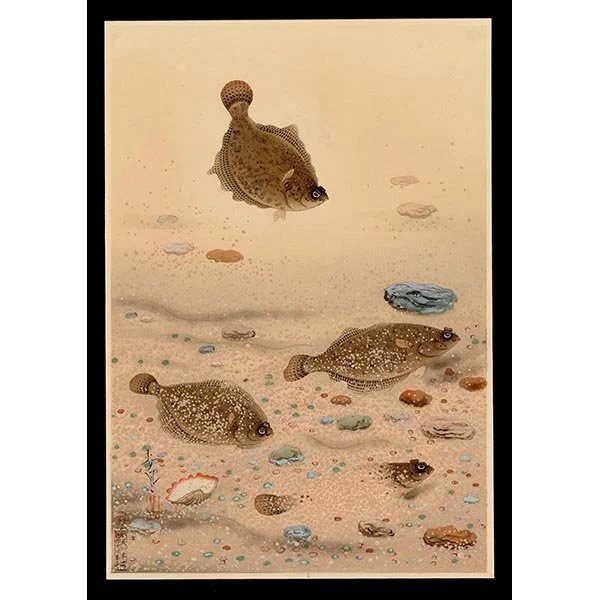
Flounder Flatfish (Karei)
Bakufu Ohno (1888–1976)
SERIES: Familiar Fishes of Japan, Volume I
MEDIUM: Woodblock print
DATE: 1938
DIMENSIONS: 15 × 10 inches
CONDITION: Excellent; no problems to note
NOTE: First edition; gold metallic pigment
SOLD
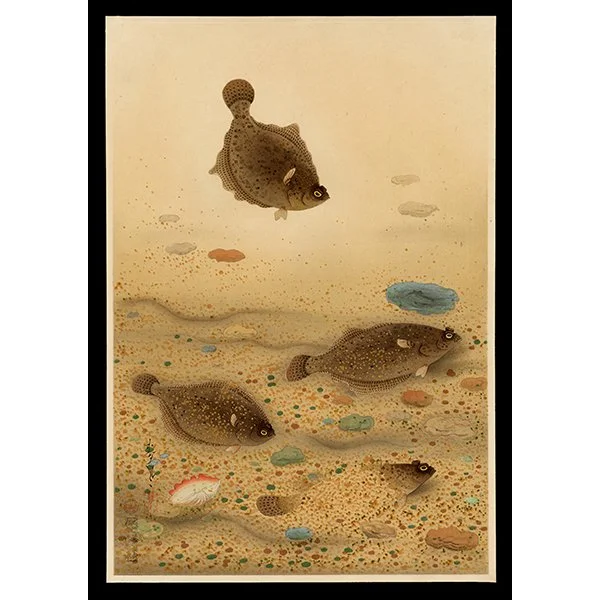
Flounder Flatfish (Karei)
Bakufu Ohno (1888–1976)
SERIES: Familiar Fishes of Japan, Volume I
MEDIUM: Woodblock print
DATE: 1938
DIMENSIONS: 15 × 10 inches
CONDITION: Excellent; no problems to note
NOTE: First edition; gold metallic pigment
SOLD
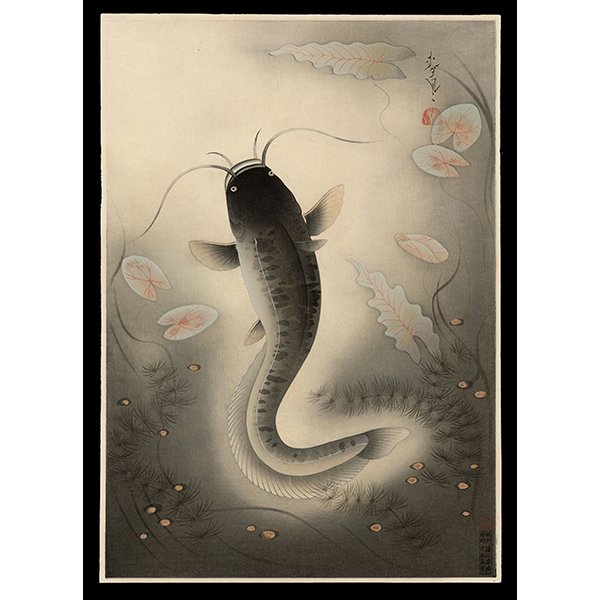
Catfish (Namazu)
Bakufu Ohno (1888–1976)
SERIES: Familiar Fishes of Japan, Volume II
MEDIUM: Woodblock print
DATE: 1938
DIMENSIONS: 10 × 15 inches
CONDITION: Excellent; no problems to note
NOTE: First edition; silver metallic pigment
SOLD
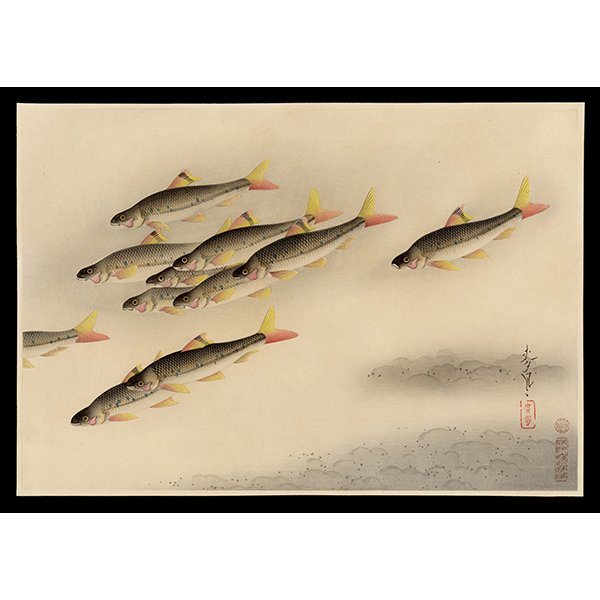
School of Higai Fish
Bakufu Ohno (1888–1976)
SERIES: Familiar Fishes of Japan, Volume II
MEDIUM: Woodblock print
DATE: 1939
DIMENSIONS: 10 × 15 inches
CONDITION: Excellent; no problems to note
NOTE: First edition; gold and silver metallic pigment
SOLD
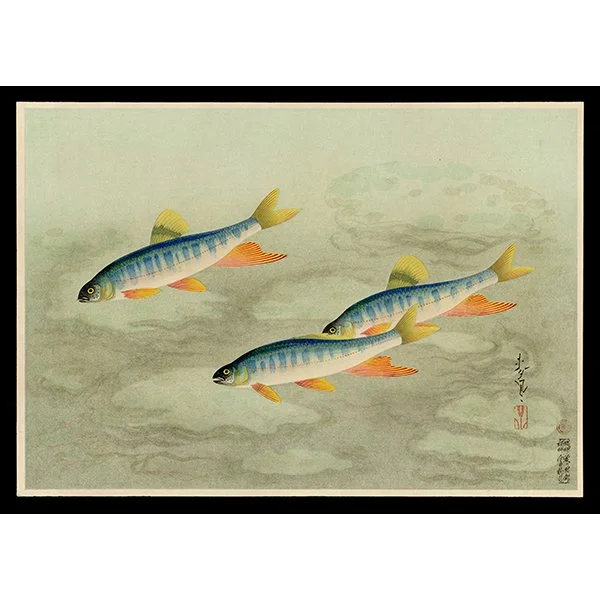
Oikawa
Bakufu Ohno (1888–1976)
SERIES: Familiar Fishes of Japan, Volume II
MEDIUM: Woodblock print
DATE: 1939
DIMENSIONS: 10 × 15 inches
CONDITION: Excellent; no problems to note
NOTE: First edition; gold and silver metallic pigment
SOLD
c. 1930s
SOLD
Carp (Koi)
Bakufu Ohno (1888–1976)
MEDIUM: Sumi and mineral pigment on paper
DATE: c. 1930s
DIMENSIONS: 17 × 20 inches (image), 52 x 26 inches with mount
CONDITION: Light staining in image
NOTE: Original painting mounted as a hanging scroll
SOLD