

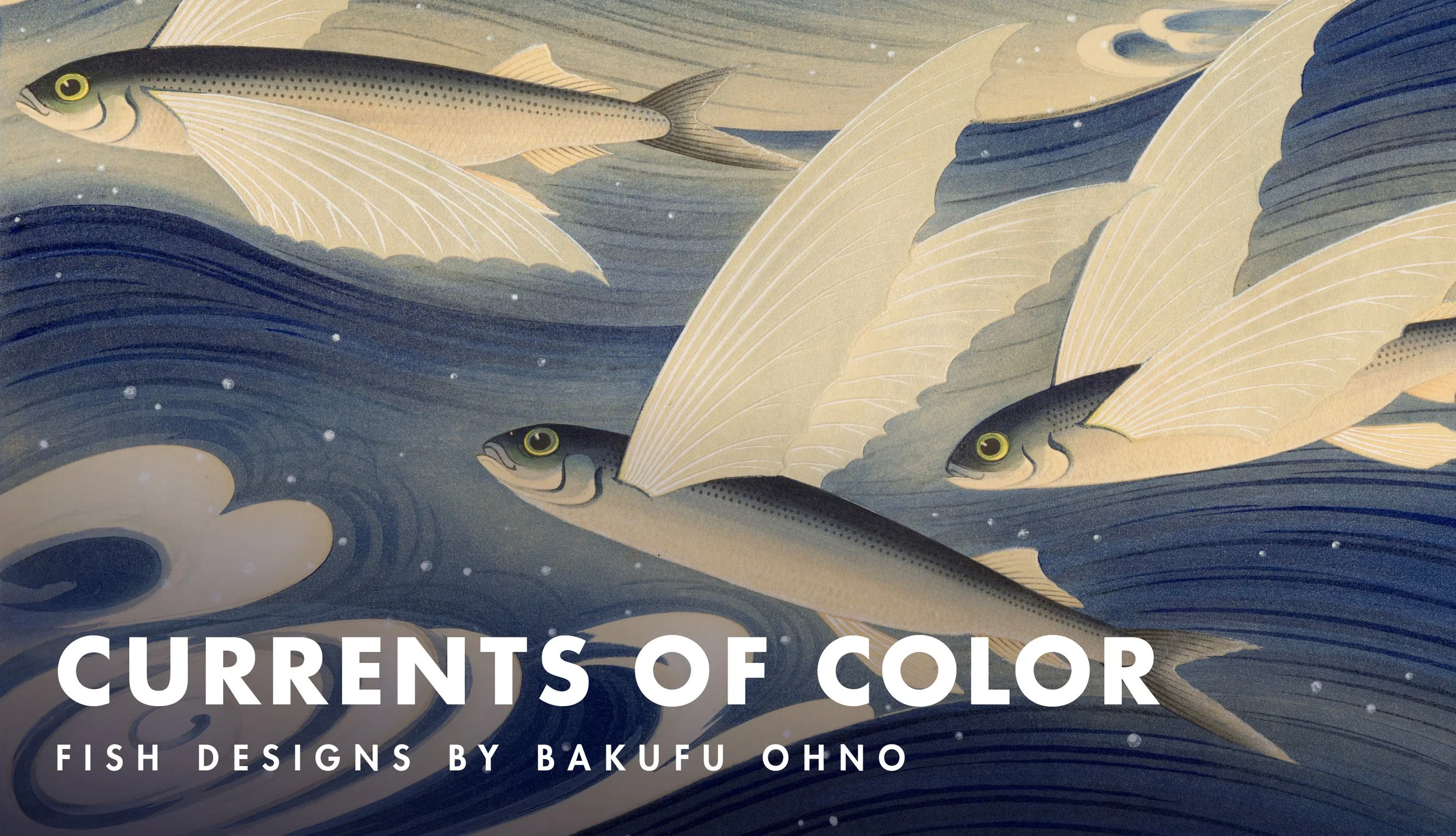
CURRENTS OF COLOR
Fish designs by Bakufu Ohno
The fish designs by Bakufu Ohno (1888–1976) rank among the finest achievements of twentieth-century Japanese printmaking. Currents of Color: Fish Designs by Bakufu Ohno brings together forty exceptional works, including early impressions from the artist's celebrated Familiar Fishes of Japan series and a selection of rare original paintings on paper and silk. Together, these works reveal an artist of extraordinary vision who transformed the aquatic life of Japan into images of remarkable beauty, uniting scientific observation with decorative elegance and technical mastery. The exhibition also presents multiple impressions of the same design printed in variant color schemes, offering a rare opportunity to examine how subtle changes in palette could dramatically alter the mood and visual impact of a composition.
The exhibition highlights the sophisticated craftsmanship that distinguished the finest Japanese prints of the period. Brilliant pigments, subtle bokashi gradations, metallic inks, and delicate embossing create images of exceptional depth, luminosity, and tactile richness. Through the collaborative efforts of artist, carver, and printer, Ohno elevated natural specimens into works of visual splendor, capturing both the physical beauty and symbolic significance of fish within Japanese culture. Long associated with prosperity, perseverance, abundance, and regional identity, these subjects reflect Japan's enduring connection to its seas, rivers, and lakes.
Complementing the woodblock prints are a number of original paintings depicting subjects that Ohno later explored in print, providing valuable insight into his creative process and the evolution of his designs across media. Created during the early Shōwa era, many of these works also reflect a broader cultural interest in documenting and celebrating the natural resources of the Japanese archipelago. Ohno's meticulous depictions of native species embody a unique intersection of art, science, and national identity, offering insight into a pivotal period of modern Japanese history while remaining among the most technically accomplished and visually captivating works of modern Japanese art.
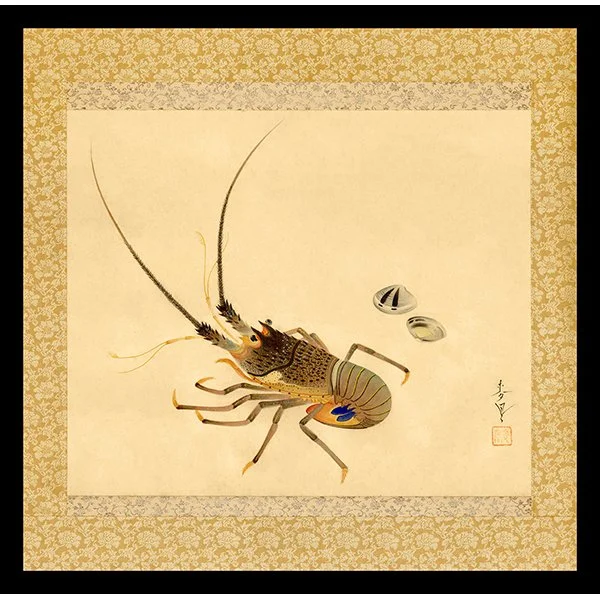
Lobster
Bakufu Ohno (1888–1976)
MEDIUM: Sumi and mineral pigments on silk
DATE: 1930s
DIMENSIONS: 16 ¾ x 20 inches (image), 54 × 25 ½ inches with mount
CONDITION: Excellent; light staining in image
NOTE: Original painting mounted as a hanging scroll
SOLD
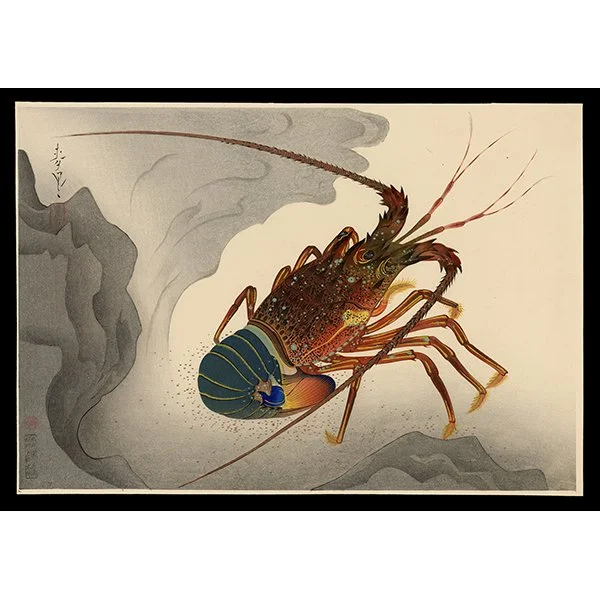
Lobster (Iseebi)
Bakufu Ohno (1888–1976)
SERIES: Familiar Fishes of Japan, Volume I
MEDIUM: Woodblock print
DATE: 1937
DIMENSIONS: 10 × 15 inches
NOTE: First edition; gold metallic pigment
RESERVED
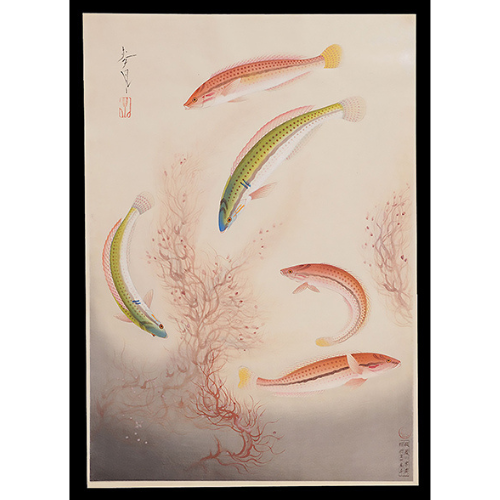
Bera
Bakufu Ohno (1888–1976)
SERIES: Familiar Fishes of Japan, Volume I
MEDIUM: Woodblock print
DATE: 1937
DIMENSIONS: 15 × 10 inches
CONDITION: Excellent; no problems to note
NOTE: First edition; gold and silver metallic pigment
SOLD
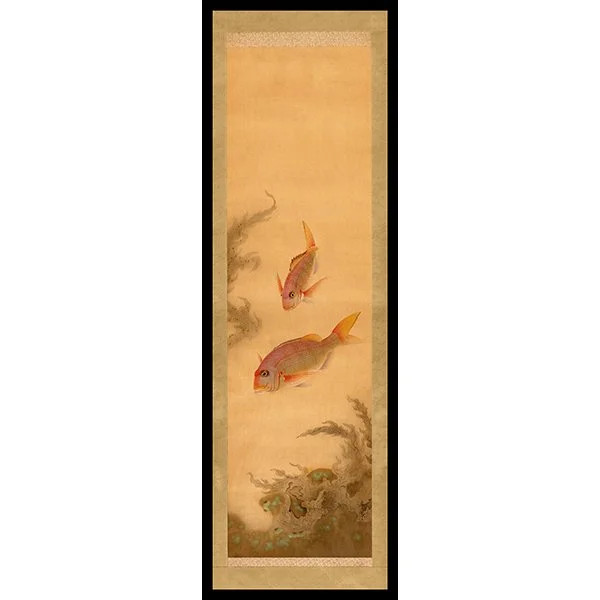
Sea Bream (Tai)
Bakufu Ohno (1888–1976)
MEDIUM: Mineral pigment on silk
DATE: c. 1930s
DIMENSIONS: 48 1/2 × 13 ¾ inches (image), 78 ½ x 17 ½ inches with mount
CONDITION: Excellent; faint staining in image
NOTE: Original painting mounted as a hanging scroll
SOLD
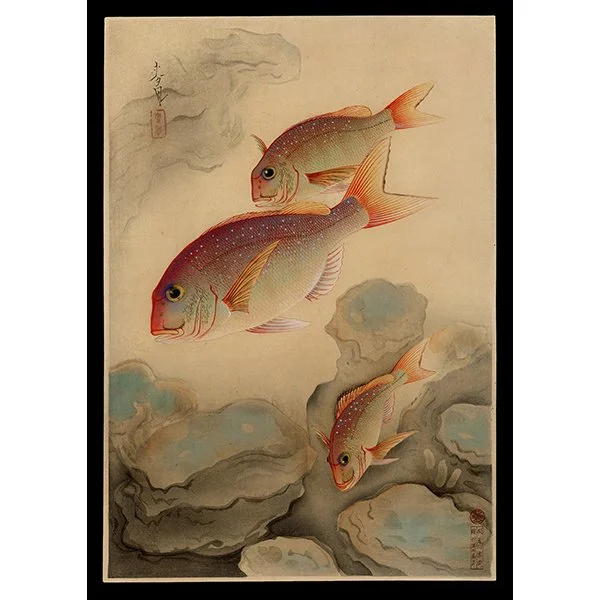
Sea Bream (Tai)
Bakufu Ohno (1888–1976)
SERIES: Familiar Fishes of Japan, Volume I
MEDIUM: Woodblock print
DATE: 1937
DIMENSIONS: 15 × 10 inches
CONDITION: Excellent; no problems to note
NOTE: First edition; gold and silver metallic pigment
SOLD
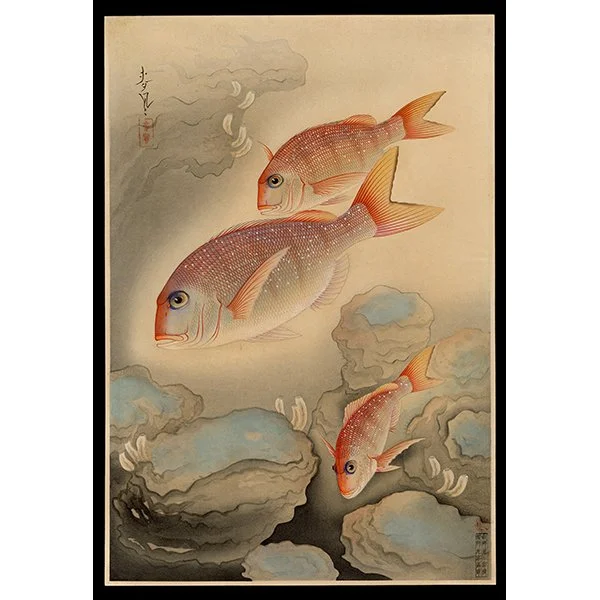
Sea Bream (Tai)
Bakufu Ohno (1888–1976)
SERIES: Familiar Fishes of Japan, Volume I
MEDIUM: Woodblock print
DATE: 1937
DIMENSIONS: 15 × 10 inches
CONDITION: Excellent; no problems to note
NOTE: First edition; gold and silver metallic pigment
SOLD
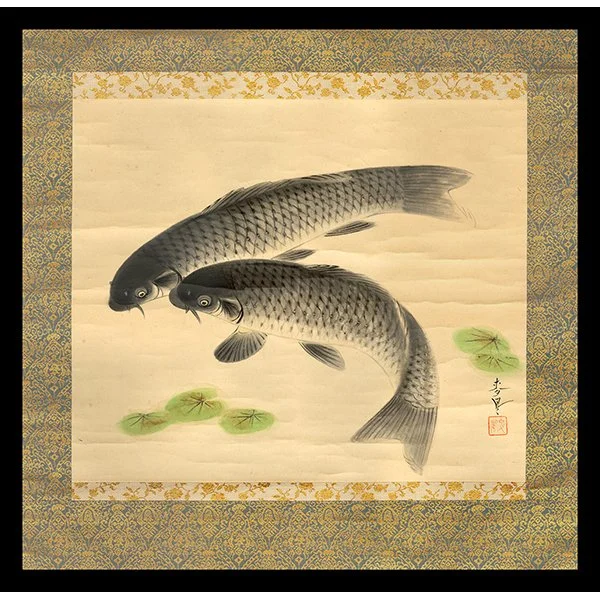
Carp (Koi)
Bakufu Ohno (1888–1976)
MEDIUM: Sumi and mineral pigment on paper
DATE: c. 1930s
DIMENSIONS: 17 × 20 inches (image), 52 x 26 inches with mount
CONDITION: Light staining in image
NOTE: Original painting mounted as a hanging scroll
SOLD
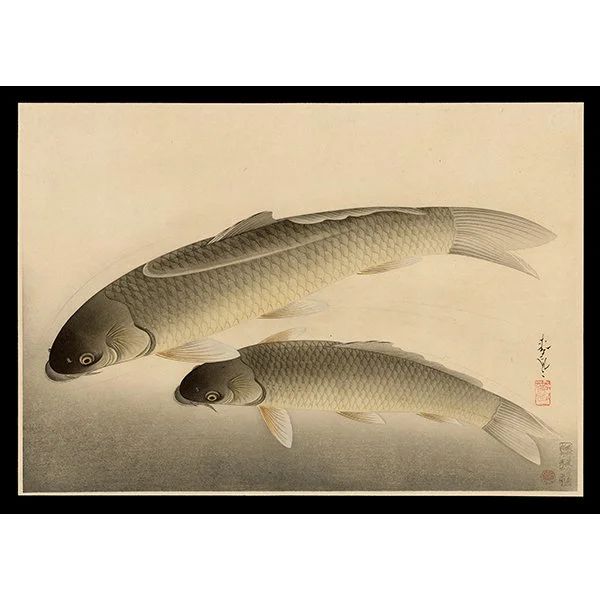
Carp (Koi)
Bakufu Ohno (1888–1976)
SERIES: Familiar Fishes of Japan, Volume I
MEDIUM: Woodblock print
DATE: 1937
DIMENSIONS: 10 × 15 inches
CONDITION: Excellent; no problems to note
NOTE: First edition; gold metallic pigment
SOLD
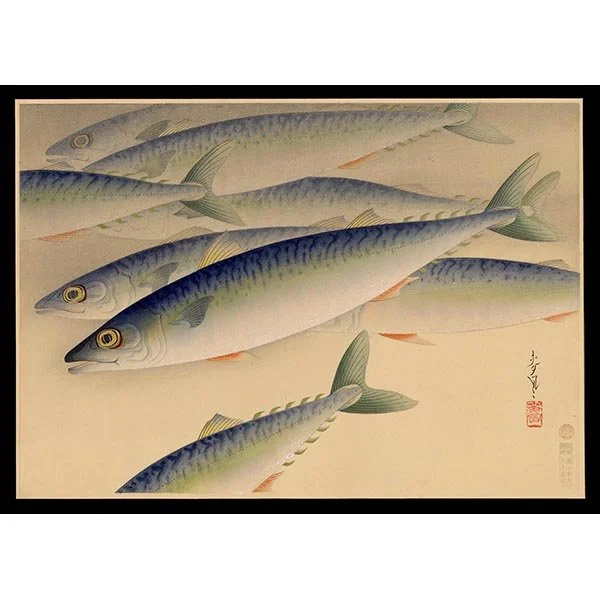
Mackerel (Saba)
Bakufu Ohno (1888–1976)
SERIES: Familiar Fishes of Japan, Volume I
MEDIUM: Woodblock print
DATE: 1937
DIMENSIONS: 10 × 15 inches
CONDITION: Excellent; no problems to note
NOTE: First edition; silver metallic pigment
SOLD
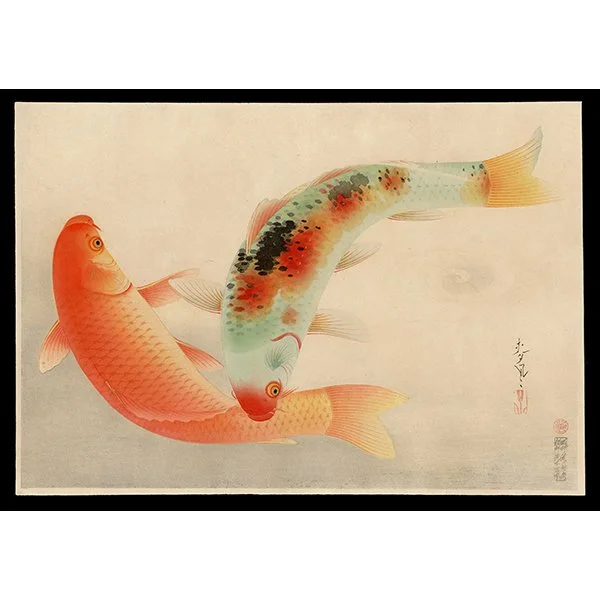
Brocade Carp (Higoi)
Bakufu Ohno (1888–1976)
SERIES: Familiar Fishes of Japan, Volume I
MEDIUM: Woodblock print
DATE: 1937
DIMENSIONS: 10 × 15 inches
CONDITION: Excellent; no problems to note
NOTE: First edition; gold metallic pigment
SOLD
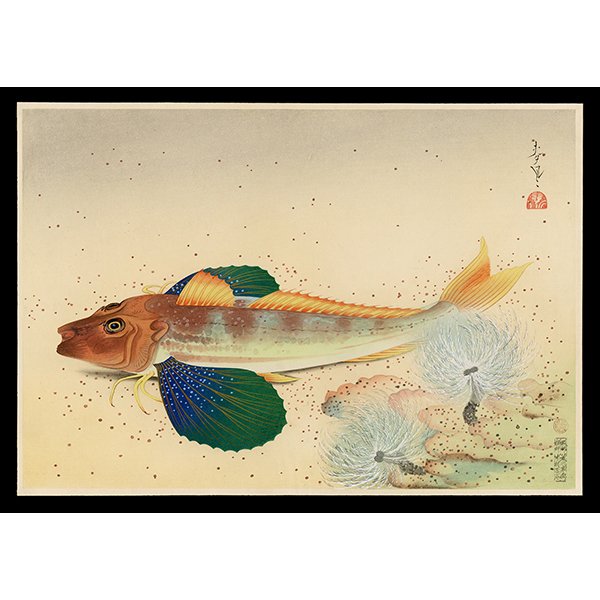
Sea Robin (Hobo)
Bakufu Ohno (1888–1976)
SERIES: Familiar Fishes of Japan, Volume I
MEDIUM: Woodblock print
DATE: 1937
DIMENSIONS: 10 × 15 inches
CONDITION: Excellent; no problems to note
NOTE: First edition; gold metallic pigment
SOLD
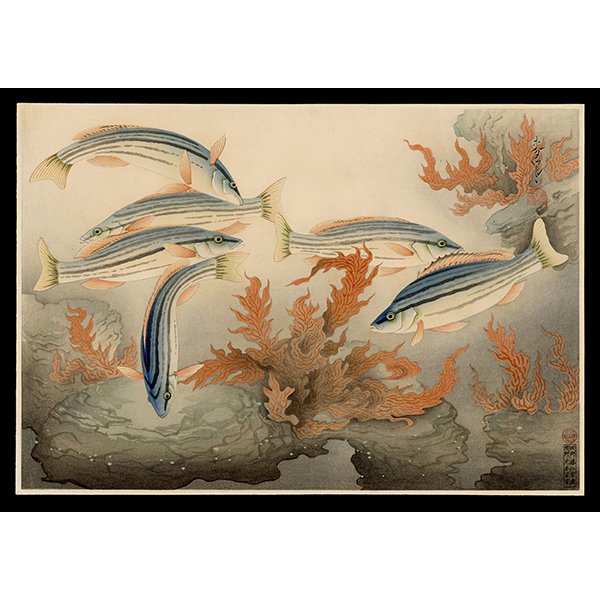
Striped Isagi (Shimaisagi)
Bakufu Ohno (1888–1976)
SERIES: Familiar Fishes of Japan, Volume I
MEDIUM: Woodblock print
DATE: 1937
DIMENSIONS: 10 × 15 inches
CONDITION: Excellent; no problems to note
NOTE: First edition; silver and gold metallic pigment
SOLD
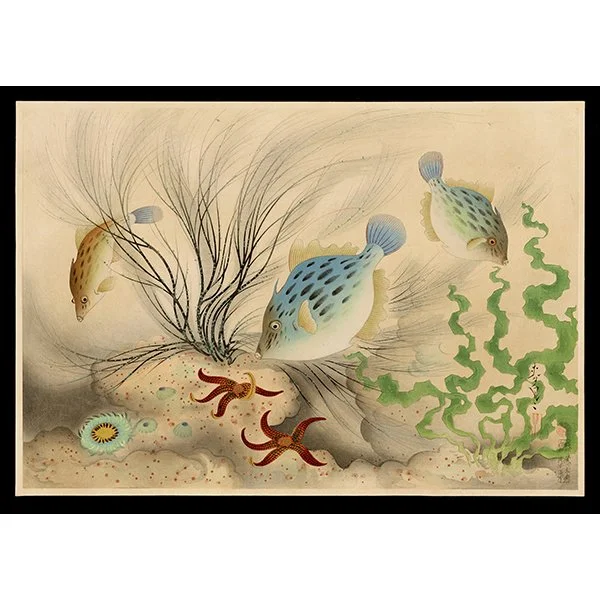
File-Fish (Kawahagi)
Bakufu Ohno (1888–1976)
SERIES: Familiar Fishes of Japan, Volume I
MEDIUM: Woodblock print
DATE: 1938
DIMENSIONS: 10 × 15 inches
CONDITION: Excellent; no problems to note
NOTE: First edition; silver metallic pigment
SOLD
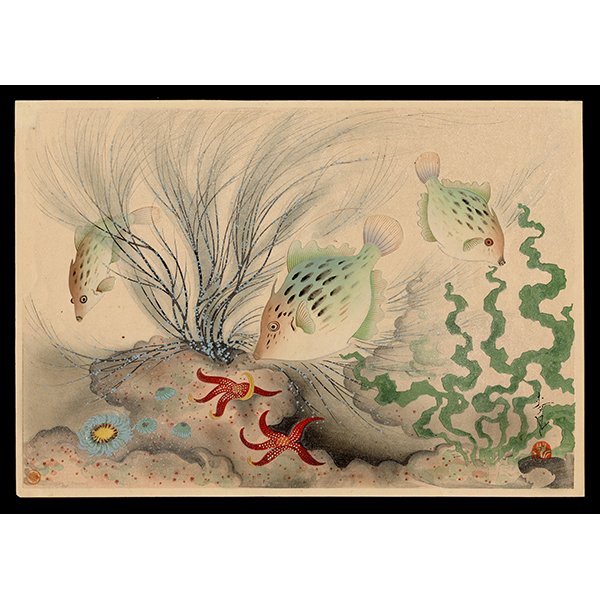
File-Fish (Kawahagi)
Bakufu Ohno (1888–1976)
SERIES: Familiar Fishes of Japan, Volume I
MEDIUM: Woodblock print
DATE: 1938
DIMENSIONS: 10 × 15 inches
CONDITION: Excellent; no problems to note
NOTE: Early second edition; silver metallic pigment
SOLD
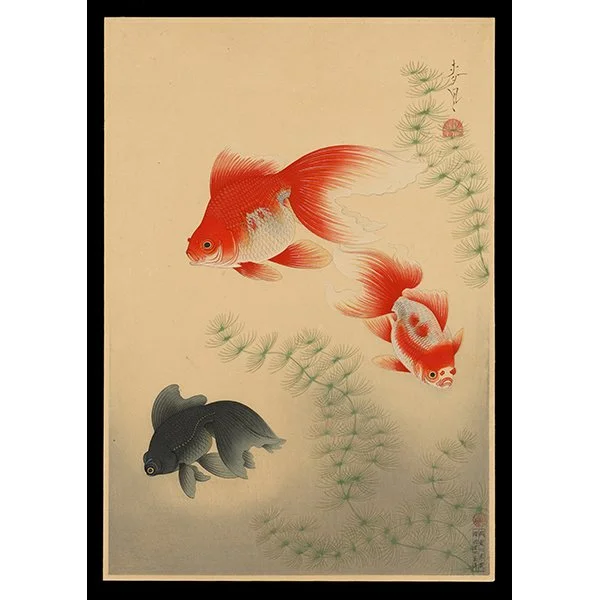
Goldfish (Kingyo)
Bakufu Ohno (1888–1976)
SERIES: Familiar Fishes of Japan, Volume I
MEDIUM: Woodblock print
DATE: 1938
DIMENSIONS: 15 × 10 inches
CONDITION: Excellent; no problems to note
NOTE: First edition; silver metallic pigment
SOLD
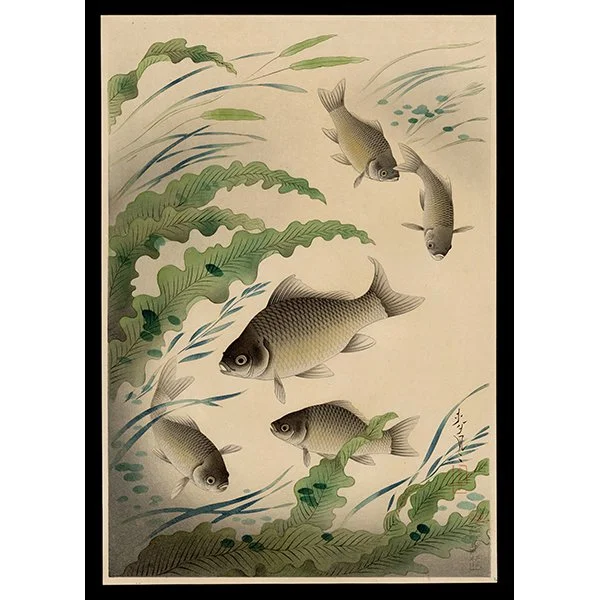
Crucian (Funa)
Bakufu Ohno (1888–1976)
SERIES: Familiar Fishes of Japan, Volume I
MEDIUM: Woodblock print
DATE: 1938
DIMENSIONS: 15 × 10 inches
CONDITION: Excellent; no problems to note
NOTE: First edition; gold metallic pigment
SOLD
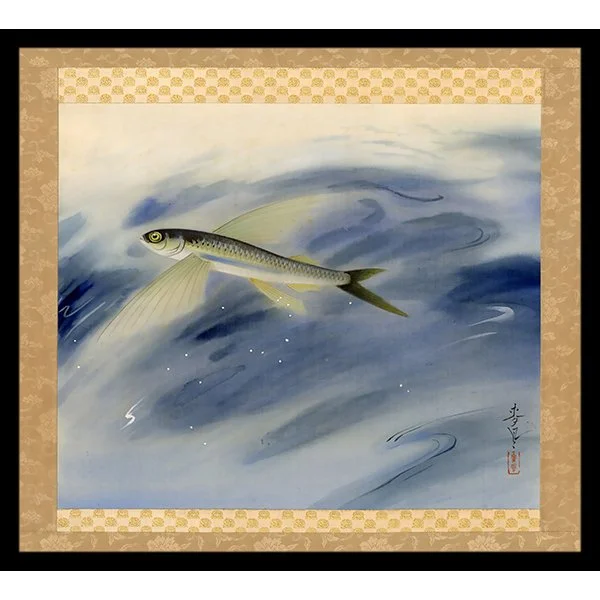
Flying Fish (Tobiuo)
Bakufu Ohno (1888–1976)
MEDIUM: Mineral pigment on silk
DATE: c. 1930s
DIMENSIONS: 14 × 16.5 inches (image), 51 x 22 x inches with mount
CONDITION: Excellent; no problems to note
NOTE: Original painting mounted as a hanging scroll
SOLD
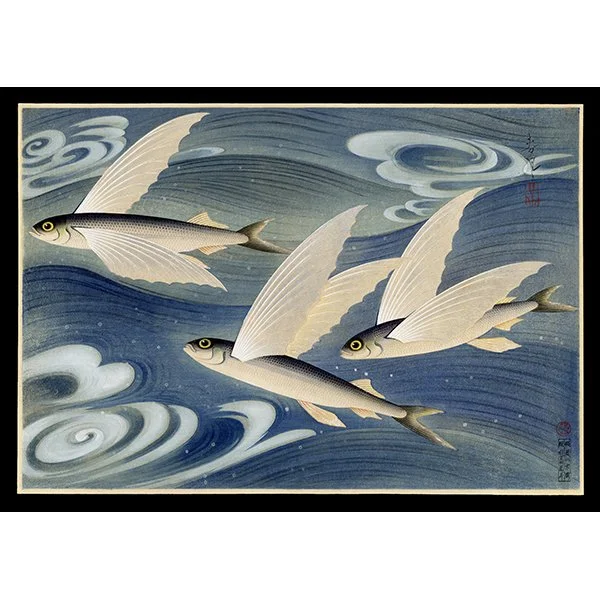
Flying Fish (Tobiuo)
Bakufu Ohno (1888–1976)
SERIES: Familiar Fishes of Japan, Volume I
MEDIUM: Woodblock print
DATE: 1938
DIMENSIONS: 10 × 15 inches
CONDITION: Excellent; no problems to note
NOTE: First edition; silver metallic pigment
SOLD
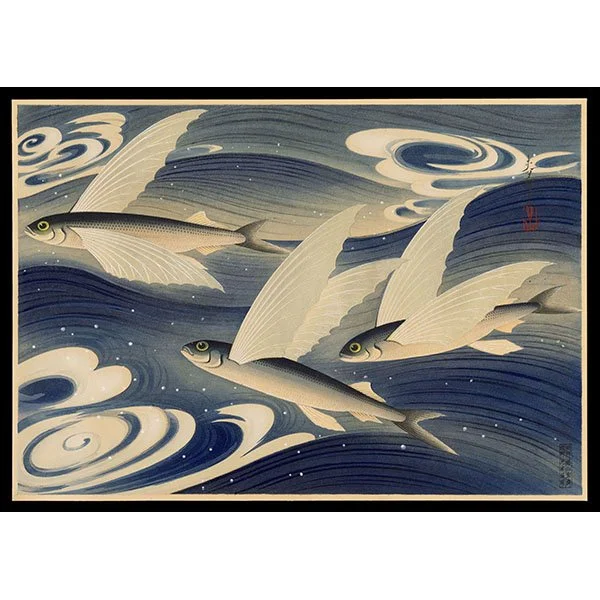
Flying Fish (Tobiuo)
Bakufu Ohno (1888–1976)
SERIES: Familiar Fishes of Japan, Volume I
MEDIUM: Woodblock print
DATE: 1938
DIMENSIONS: 10 × 15 inches
CONDITION: Excellent; no problems to note
NOTE: First edition; silver metallic pigment
SOLD
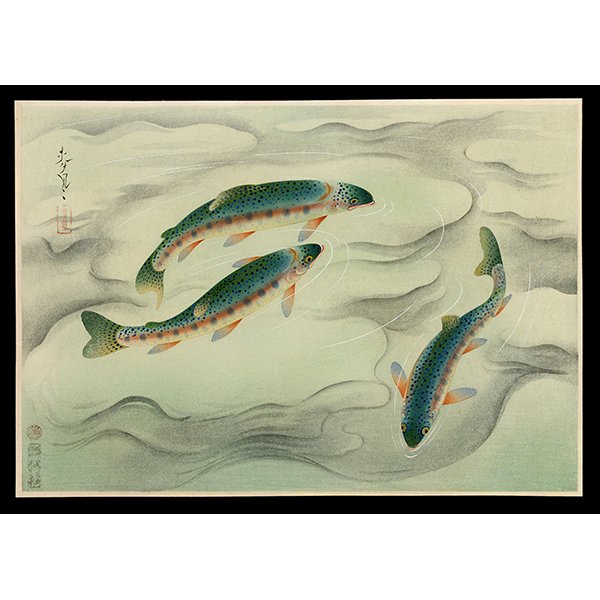
Rainbow Trout (Nijimasu)
Bakufu Ohno (1888–1976)
SERIES: Familiar Fishes of Japan, Volume I
MEDIUM: Woodblock print
DATE: 1938
DIMENSIONS: 10 × 15 inches
CONDITION: Excellent; no problems to note
NOTE: First edition; silver metallic pigment
SOLD
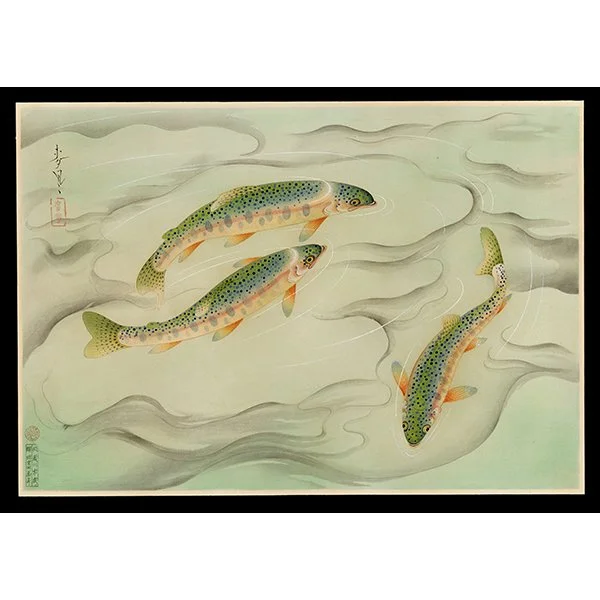
Rainbow Trout (Nijimasu)
Bakufu Ohno (1888–1976)
SERIES: Familiar Fishes of Japan, Volume I
MEDIUM: Woodblock print
DATE: 1938
DIMENSIONS: 10 × 15 inches
CONDITION: Excellent; no problems to note
NOTE: First edition; silver and gold metallic pigment
SOLD
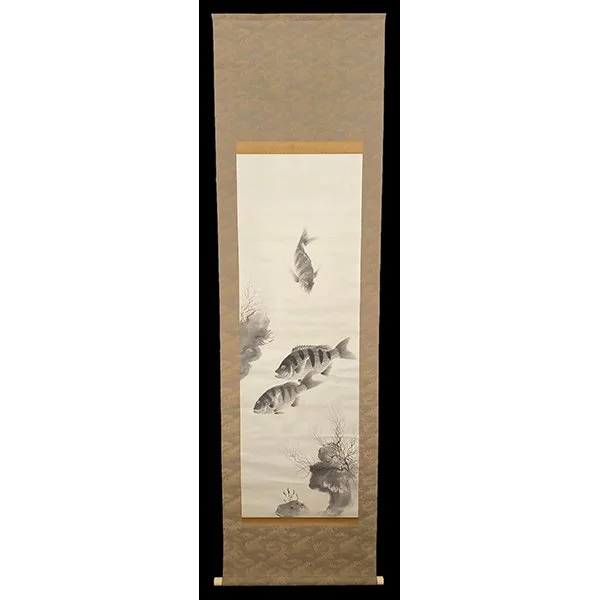
Three Freshwater Fish
Bakufu Ohno (1888–1976)
MEDIUM: Sumi on silk
DATE: 1930s
DIMENSIONS: 48 × 16 ¼ inches (image), 75 × 75 ½ inches with mount
CONDITION: Excellent; no problems to note
NOTE: Original painting mounted as a hanging scroll
SOLD
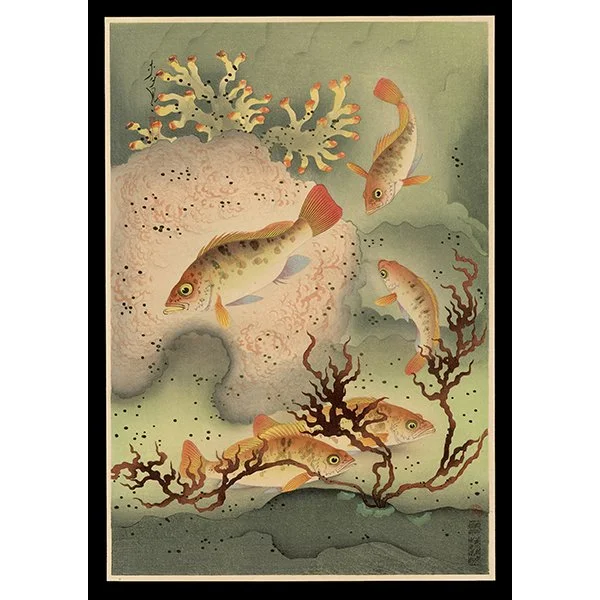
Rockfish (Mebaru)
Bakufu Ohno (1888–1976)
SERIES: Familiar Fishes of Japan, Volume I
MEDIUM: Woodblock print
DATE: 1938
DIMENSIONS: 10 × 15 inches
CONDITION: Excellent; no problems to note
NOTE: First edition; silver metallic pigment
SOLD
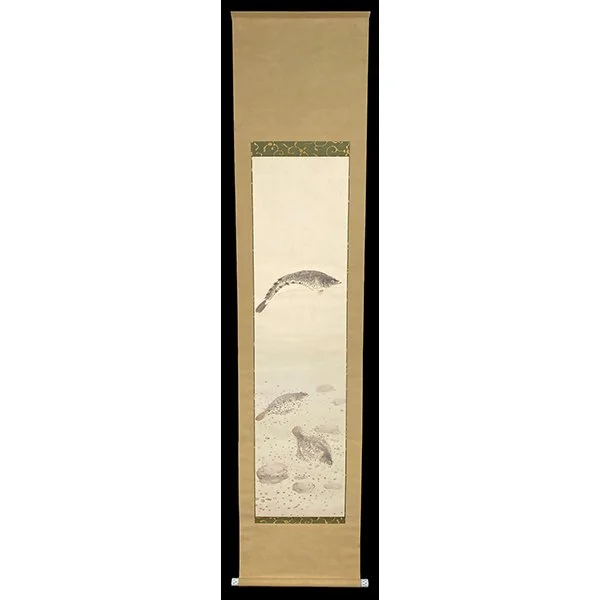
Flounders
Bakufu Ohno (1888–1976)
MEDIUM: Sumi and mineral pigment on paper
DATE: 1930s
DIMENSIONS: 48 1/2 × 12 3/8 inches (image), 78 × 17 inches inches with mount
CONDITION: Excellent; no problems to note
NOTE: Original painting mounted as a hanging scroll
SOLD
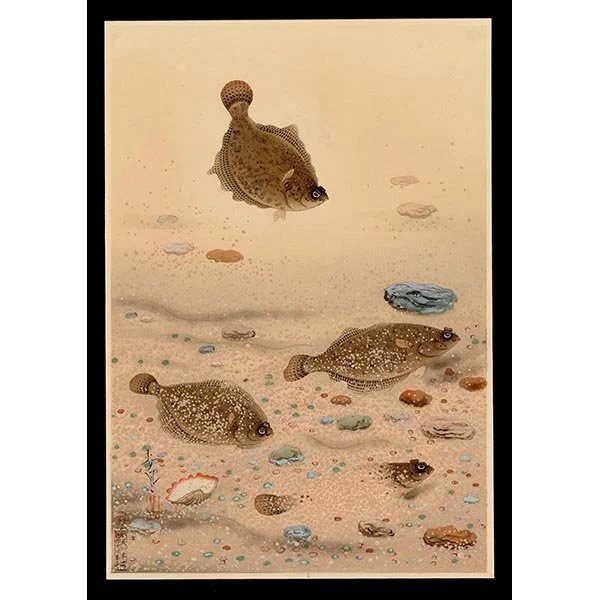
Flounder Flatfish (Karei)
Bakufu Ohno (1888–1976)
SERIES: Familiar Fishes of Japan, Volume I
MEDIUM: Woodblock print
DATE: 1938
DIMENSIONS: 15 × 10 inches
CONDITION: Excellent; no problems to note
NOTE: First edition; gold metallic pigment
SOLD
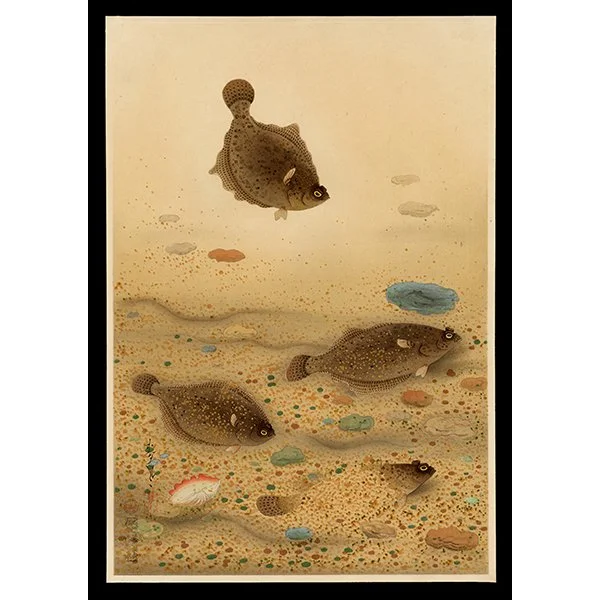
Flounder Flatfish (Karei)
Bakufu Ohno (1888–1976)
SERIES: Familiar Fishes of Japan, Volume I
MEDIUM: Woodblock print
DATE: 1938
DIMENSIONS: 15 × 10 inches
CONDITION: Excellent; no problems to note
NOTE: First edition; gold metallic pigment
SOLD
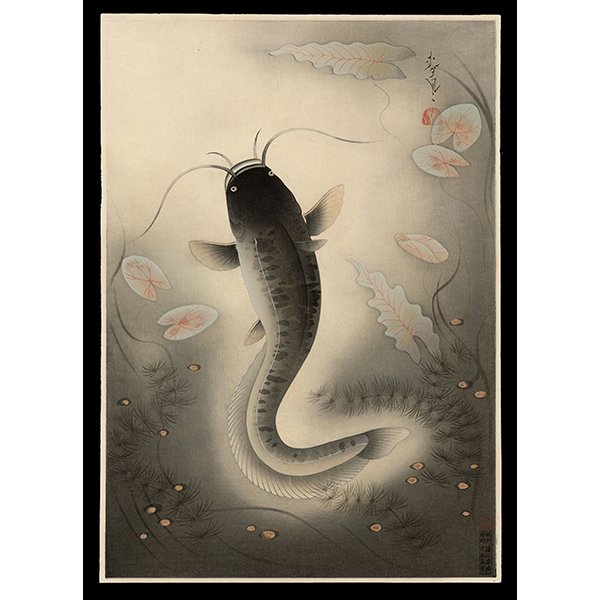
Catfish (Namazu)
Bakufu Ohno (1888–1976)
SERIES: Familiar Fishes of Japan, Volume II
MEDIUM: Woodblock print
DATE: 1938
DIMENSIONS: 10 × 15 inches
CONDITION: Excellent; no problems to note
NOTE: First edition; silver metallic pigment
SOLD
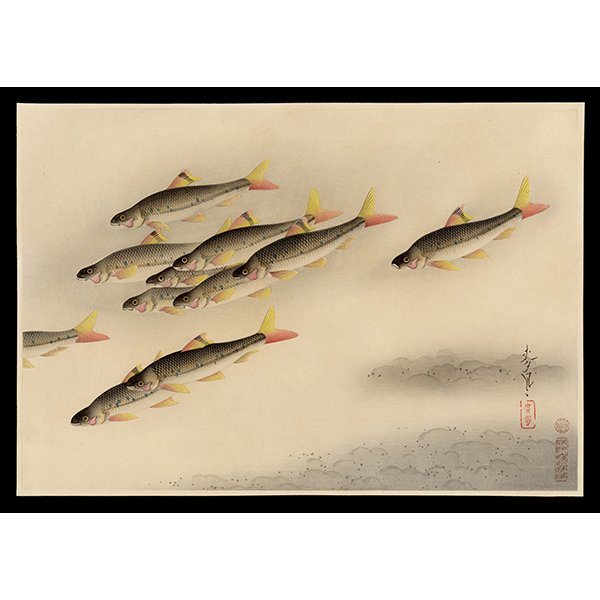
School of Higai Fish
Bakufu Ohno (1888–1976)
SERIES: Familiar Fishes of Japan, Volume II
MEDIUM: Woodblock print
DATE: 1939
DIMENSIONS: 10 × 15 inches
CONDITION: Excellent; no problems to note
NOTE: First edition; gold and silver metallic pigment
SOLD
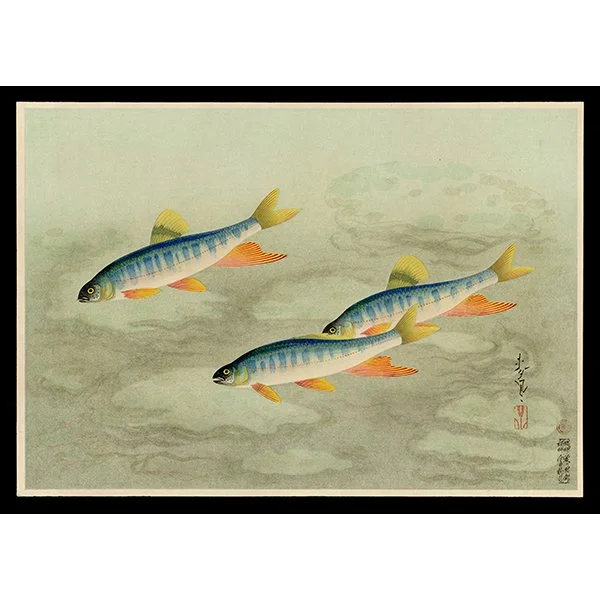
Oikawa
Bakufu Ohno (1888–1976)
SERIES: Familiar Fishes of Japan, Volume II
MEDIUM: Woodblock print
DATE: 1939
DIMENSIONS: 10 × 15 inches
CONDITION: Excellent; no problems to note
NOTE: First edition; gold and silver metallic pigment
SOLD
1937
SOLD
Sweetfish (Ayu)
Bakufu Ohno (1888–1976)
SERIES: Familiar Fishes of Japan, Volume I
MEDIUM: Woodblock print
DATE: 1937
DIMENSIONS:
CONDITION: Excellent; no problems to note
NOTE: First edition; silver mica highlights
SOLD