

 Image 1 of 1
Details
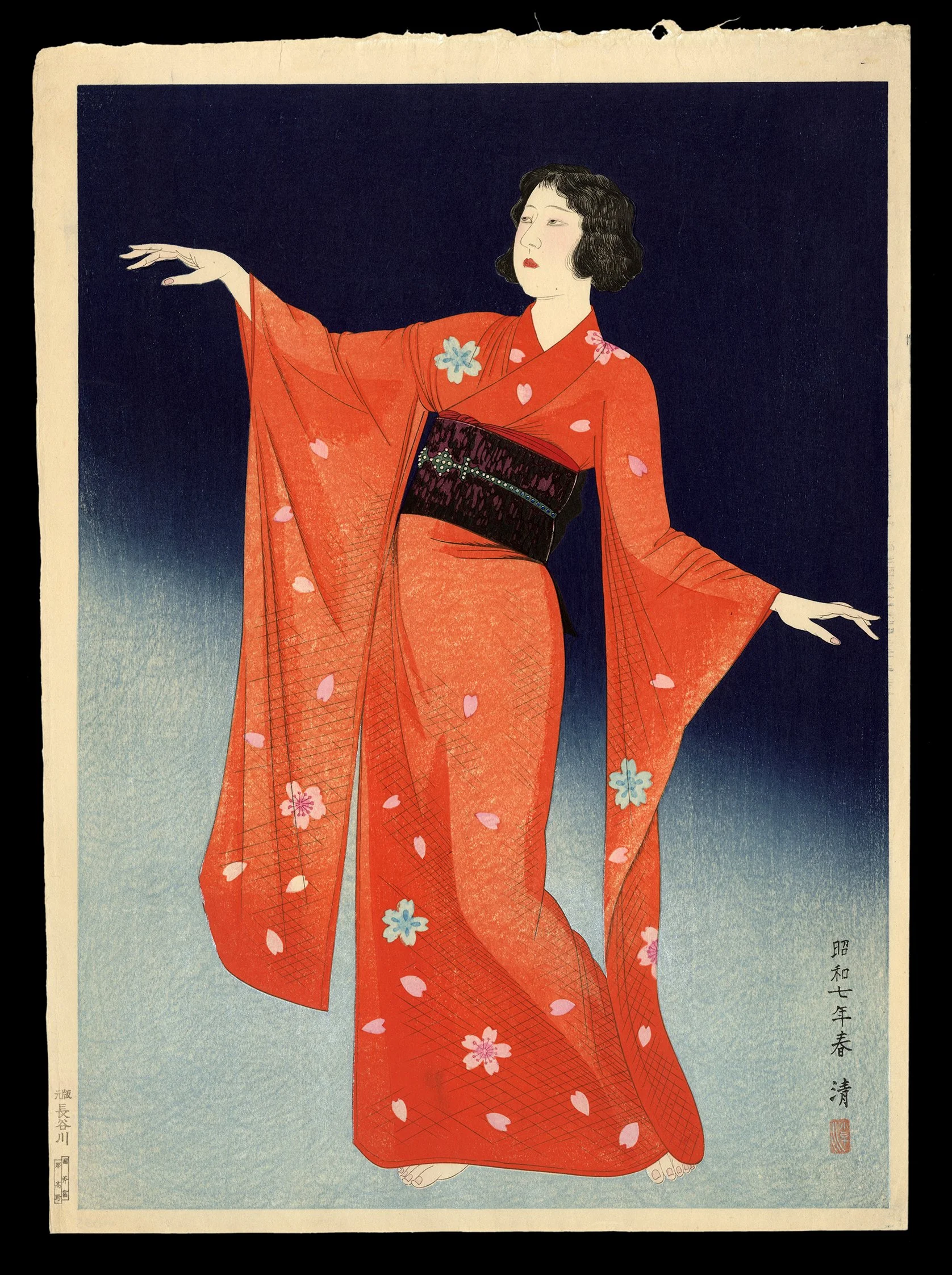
In Odori, Kobayakawa Kiyoshi presents a striking vision of feminine elegance suspended between tradition and modernity. A solitary woman, dressed in a flowing orange kimono scattered with pale blossoms, extends her arms in a poised dance gesture against a vast indigo background that fades softly toward the lower edge of the composition. Her softly waved bob hairstyle immediately identifies her as a figure of the early Shōwa period rather than a timeless classical beauty, subtly transforming the image from conventional bijin-ga into a distinctly modern interpretation of performance and self-presentation.
The composition reflects the complex cultural atmosphere of Japan during the early 1930s, when Western influence and revived interest in traditional arts existed side by side within urban life. Dance, theater, and performance occupied a central place in metropolitan entertainment culture, from jazz halls and revue theaters to modernized interpretations of classical Japanese movement. Kobayakawa captures this intersection beautifully. Although the figure wears a kimono adorned with seasonal motifs, her posture and cropped hairstyle evoke the cosmopolitan sensibility associated with the moga, the modern girl who navigated Tokyo’s evolving social world through fashion, leisure, and cultivated self-awareness.
The artist’s treatment of color and space is particularly masterful. The glowing red-orange kimono appears almost luminous against the immense field of deep blue, creating a dramatic contrast that isolates the dancer within an atmosphere of theatrical stillness. Rather than situating the figure within a recognizable stage or interior, Kiyoshi removes all contextual distractions, allowing gesture alone to define the emotional rhythm of the image. The long sleeves and extended arms create sweeping diagonal lines across the composition, lending the figure a graceful sense of motion while preserving an underlying calm restraint.
At the same time, Odori reflects the shifting emotional climate of early Shōwa Japan. By 1932, urban culture continued to celebrate fashion, spectacle, and modern entertainment, yet beneath this refinement lay growing political uncertainty and social tension. Kiyoshi’s dancer appears both confident and distant, embodying a moment in which beauty and performance became forms of both escape and quiet assertion amid an increasingly controlled social atmosphere. The image preserves not merely a dance, but the fragile elegance of a cultural world balancing between openness and restraint.
Connoisseur's Note
Among Kobayakawa Kiyoshi’s most refined compositions, Odori demonstrates the artist’s extraordinary ability to synthesize classical beauty with modern graphic sensibility. Unlike earlier bijin-ga traditions that often emphasized narrative or elaborate setting, Kiyoshi reduces the image to its essential emotional elements: gesture, color, silhouette, and mood. The result feels remarkably contemporary, anticipating the visual sophistication of modern fashion illustration and stage design while remaining firmly rooted in the discipline of woodblock printmaking.
The figure herself occupies a fascinating position within the visual culture of the early 1930s. Though clothed traditionally, she does not embody nostalgia. Her hairstyle, elongated pose, and stylized presentation reveal the influence of cinema, dance revues, and international Art Deco aesthetics that permeated Tokyo during the period. Kiyoshi understood that modern identity in Japan was increasingly constructed through performance and appearance, and Odori captures that transformation with exceptional subtlety.
Collectors are often drawn to this print for its remarkable balance of simplicity and emotional depth. The immense field of indigo surrounding the dancer introduces an almost dreamlike stillness, heightening the sensation that the figure exists outside ordinary time. The carefully controlled gradation at the lower edge of the composition softens the transition between figure and void, allowing the image to unfold gradually rather than all at once.
Viewed today, Odori carries an unmistakable sense of ephemerality. The dancer’s raised arms and measured movement suggest a gesture already passing as it is perceived. Kiyoshi preserves this transient moment with extraordinary refinement, transforming the print into both a celebration of early Shōwa elegance and a quiet meditation on performance, identity, and the fleeting nature of modern cultural life.

More prints by Kobayakawa Kiyoshi:

1934
Price upon Request
Western Style Dancing
Kobayakawa Kiyoshi (1899–1948)
MEDIUM: Woodblock print
DATE: 1934
EDITION:
DIMENSIONS: 17 1/8 x 10 ¾ inches
CONDITION: Excellent; no problems to note
NOTE: Watanabe D-type seal at lower left, first state
LITERATURE: The Female Image, pl. 200
Price Upon Request